After a six-year break, La Nuit des Musées is officially back in Lebanon this summer! Today, July 29, 2025, museums across Beirut and several other cities will open their doors to the public free of charge from 7:00 PM to 11:00 PM.
This initiative is organized by the Lebanese Ministry of Culture in collaboration with the Directorate General of Antiquities, and it’s a fantastic opportunity for residents and tourists alike to rediscover the country’s rich heritage.
List of Participating Museums:
📍 Beirut Museums
National Museum of Beirut
Nicolas Ibrahim Sursock Museum
MIM Museum (Mineral Museum)
AUB Archaeological Museum
AUB Geology Museum
Museum of Lebanese Prehistory
BDL Bank Museum
Villa Audi – Mosaic Museum
Nuhad Es-Said Private Museum (Pavillon Nuhad Es-Said)
USJ Oriental Library
French Institute Gallery – Beirut
📍 Jounieh
USEK Archaeological Museum
📍 Byblos (Jbeil)
Aram Bezikian Museum
Byblos Site Museum (Byblos Castle)
MACAM – Modern and Contemporary Art Museum
Memoire du Temps – Fossil Museum
Fondation Louis Cardahi – LAU Byblos
📍 Tripoli
Citadel of Saint Gilles Museum (Tripoli Castle)
📍 Saida
Debbane Palace
Khan el Franj
The Soap Museum
Hammam Al Jadeed
Khan Sacy
Whether you’re into archaeology, fine art, science, or contemporary installations, this is your chance to explore Lebanon’s cultural treasures in a whole new way at night and totally for free.
This night is also a great opportunity to bring the kids, go on a fun educational outing with friends, or enjoy a different kind of date night. La Nuit des Musées isn’t just about exhibits, it’s a celebration of our shared culture, creativity, and resilience.
Lebanon woke up to heartbreaking news on July 26, 2025. Ziad Rahbani, one of the country’s most influential cultural figures, has passed away in Beirut at the age of 69. His departure leaves a void that will be deeply felt by generations who grew up listening to his music, quoting his plays, and admiring his courage to speak truth to power.
The Genius Behind the Curtain
Born in Antelias, Lebanon, in 1956, Ziad Rahbani was the son of two musical legends: Fairouz, the voice of Lebanon, and Assi Rahbani, one half of the Rahbani Brothers duo that shaped Arabic music throughout the 20th century. From the very beginning, Ziad was destined for artistic greatness — but he never relied solely on his family name. Instead, he carved out his own, often controversial, legacy as a composer, playwright, pianist, satirist, and social commentator.
Most Notable Works
Ziad’s musical and theatrical works blended jazz, classical Arabic, and Western influences, often laced with sharp political and social critique. Some of his most iconic plays include:
Sahriyyeh (1973) – his first play, written when he was only 17.
Bennesbeh La Bokra Chou? (1978) – a cult classic portraying post-civil war disillusionment.
Film Ameriki Tawil (1980) – a biting critique of Lebanese societal contradictions.
Shi Fashil (1983) – mixing humor and tragedy in a uniquely Ziad way.
In music, his compositions for Fairouz stand among the most beloved in modern Arabic music, including:
El Bosta
Kifak Inta
Habaytak Ta Nseet El Noum
Ziad’s jazz-infused solo works, such as “Bi Ma Enno” and “Abou Ali”, broke the mold of Arabic pop, challenging musical norms and thrilling fans across the Arab world.
A Complicated Yet Tender Bond with Fairouz
Despite political and personal differences that were sometimes played out in the public eye, Ziad always maintained a profound artistic connection with his mother, Fairouz. Their collaborations resulted in timeless songs that became part of Lebanon’s collective memory. For many, Ziad was not just Fairouz’s son, but the artist who redefined her musical style in the late 1970s and 1980s, giving her voice a new edge that resonated with younger generations.
Personal Life & Politics
Ziad was famously outspoken, politically aligned with leftist ideologies and fiercely critical of sectarianism, corruption, and the hypocrisy he saw in Lebanese society. He remained deeply connected to Beirut, often seen in Hamra cafés, scribbling notes or engaged in fiery discussions. His life was marked by moments of solitude, brilliance, and contradiction — traits that only deepened his mystique.
Despite moments of withdrawal from public life, Ziad never stopped creating, never stopped thinking, and never stopped provoking. Whether through a sarcastic radio interview or a surprise appearance at a jazz concert, he always had something to say — and people always listened.
Legacy That Lives On
Ziad Rahbani was not just an artist. He was a mirror, held up to a society struggling to find its way. His work gave voice to the unheard, mocked the powerful, and offered comfort to the broken. In a country that has long wavered between chaos and resilience, Ziad was a constant — raw, real, and unapologetically Lebanese.
As Lebanon mourns this giant of culture, we remember his words, his music, and the unforgettable laughter and tears he brought into our lives.
Rest in peace, Ziad. Your voice will echo through the alleyways of Beirut for generations to come.
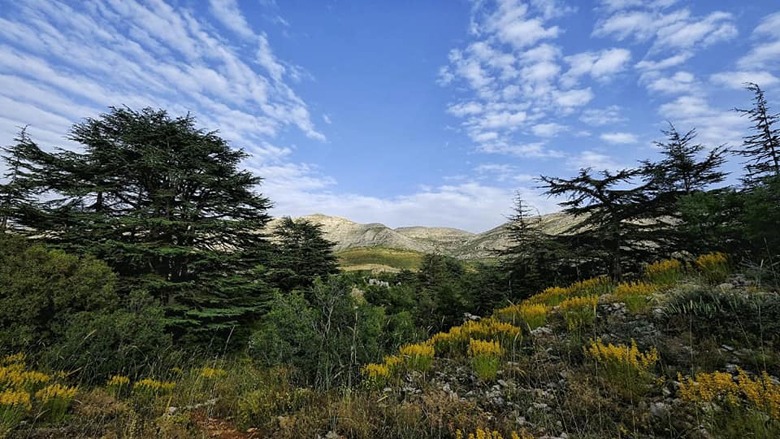
Minister of Environment Fadi Jreissati announced earlier this week that Lebanon’s nature reserves will be open for free to the public on Sunday March 10th for the occation of the National Day for Nature reserves.
Access to the nature reserves isn’t much anyway, as I recall paying around 5,000L.L when I went to Arz El Shouf few years ago, but the announcement comes as a reminder for us all to actually go and learn about the value of these reserve with all the biological diversity they encompass.
Here’s a list of the available nature reserves in Lebanon from Wikipedia and new other sources:
Ehden Forest
Nakheel Islands
Cedars of Tannourine Forest
Chnaneer
Arz Jaj
Bentael natural reserve.
Al Yammouna
Arz El Chouf
Tyre coast
Houjeir Valley
Karm Shobat
Nature reserves of Ramiyah, Kafra, Beit Leef and Dibil.
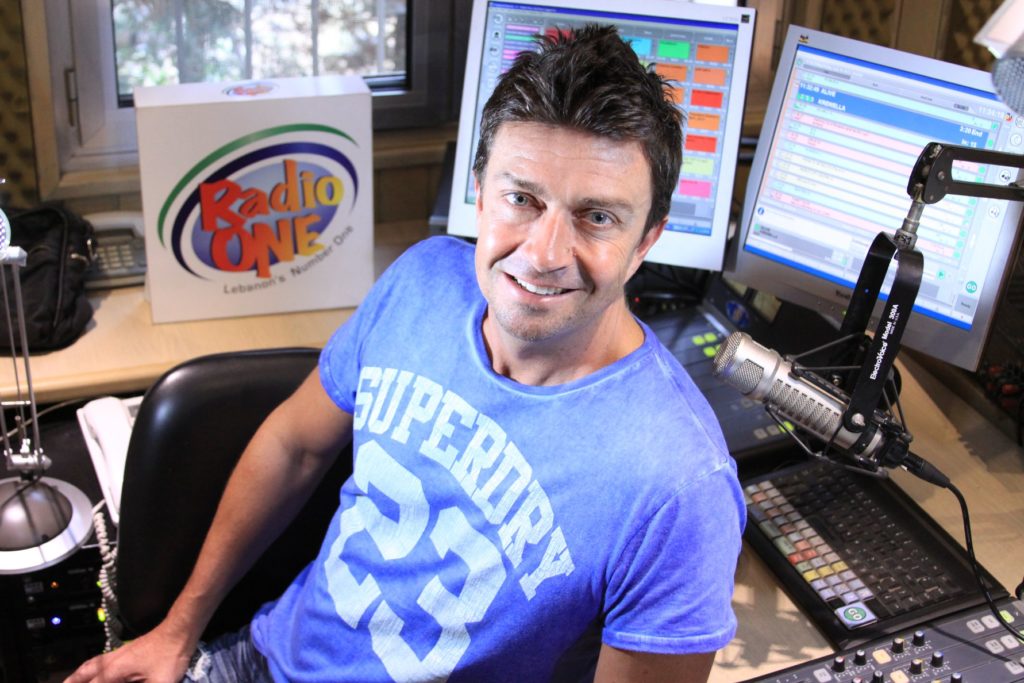
To all those who loved the late Gavin Ford and tune to his morning show on Radio One, you will will definitely find solace in listening a tribute show for him that will air on the 7th of December between 9AM and 10AM on 8 Lebanese radio stations (Radio One, Virgin Radio, Mix FM, NRJ, Light FM, Nostalgie, Fame FM and Power FM).
There is no doubt Gavin was a quite loved media personality and his show Gavin Ford In The Morning left a mark in the industry, that’s why he certainly deserves this gesture by the participating radio stations.
The pre-recorded show will be produced by Dan Harper and Olga Habre and is going to be available on YouYube afterwards. If you have a memory to share about Gavin or a special recording from one of his radio programs, you email it to Dan on dan@danharper.co.uk so they can try to include your contribution.
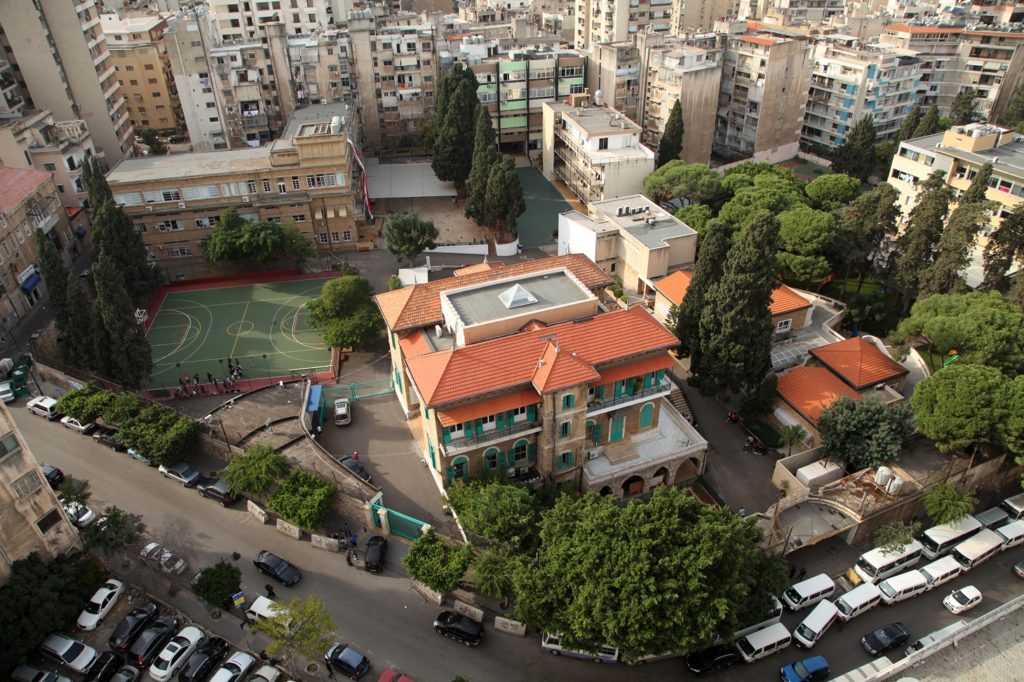
Lycée Abdel Kader, one of the most reputable schools in Beirut that was established over 100 years ago and a prominent landmark in Beirut, is now at risk of simply disappearing without leaving a trace.
How it all started
To those who are out of the loop of what is happening with the school, here’s a brief summary:
In 1985, Hariri Foundation bought the school and managed along with the Agence pour l’Enseignement Français à l’Étranger (AEFE) and the Mission Laïque Française (MLF). And until 2005, the school AND the land it is built on were effectively under the control of the late PM Rafic Hariri so there was no need to worry about rent.
After his assassination, his wealth was eventually split among his children, and Lycée Abdel Kader’s land ended up going to his girl Hind while his wife Nazik was controlling the Hariri Foundation. So basically Hind got a piece of land that in unable to generate any profit in its current situation, and it turned out she had big plans in mind. That’s why a couple of years ago it was confirmed that she wants to start a project in it and asked the school to seek another location.
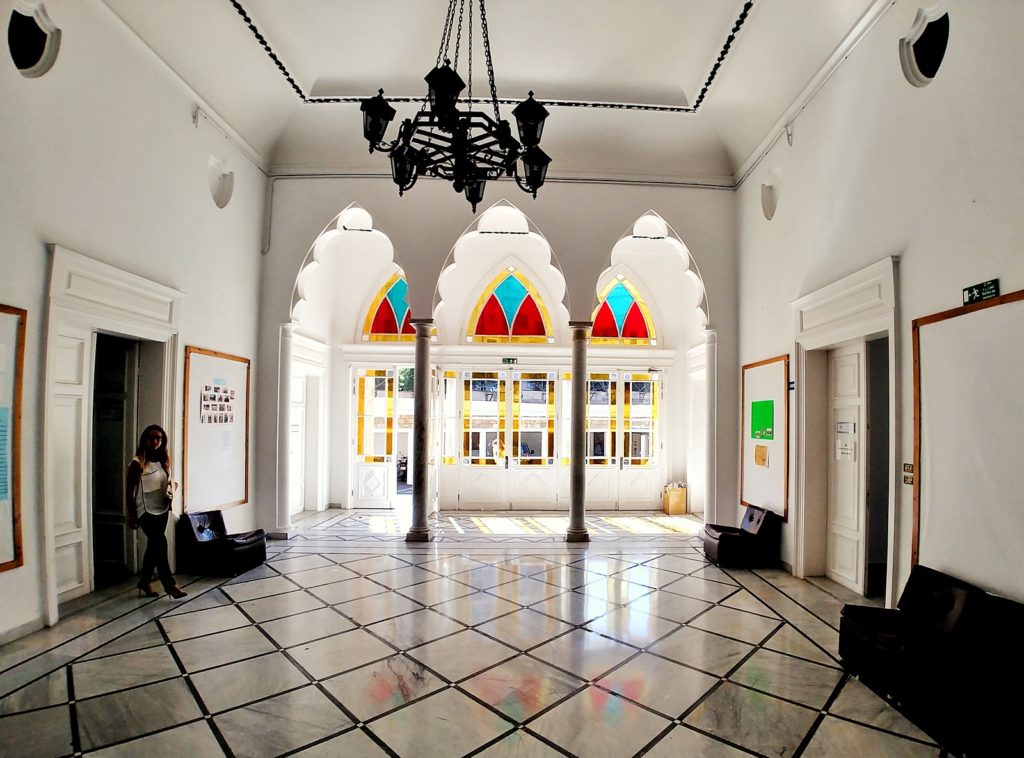
No one exactly knows what’s coming next for the school, some claim she aims to build a new mall there even though the area is so crowded already, and others say it will turn into residential towers. Keep in mind that the school has a very old castle within its premises, and no one also knows if it will be preserved or not.
The alternatives
Lycée Abdel Kader is one of several institution that shaped the identity of Beirut, that’s why the suggestions to move it outside the city were rejected by all stakeholders. On the other hand, Beirut has no big spaces left to accommodate a school as large as LAK with all the facilities they need.
Due to that, people in charge thought of renting one of the Makassed schools buildings in Beirut since some of them are currently vacant and big enough for their needs, but they were faced by the Makassed Alumni who refused to have the identity of their old school changed.
This is where things started getting problematic for the Hariri Foundation, and with very little options left they apparently discussed renting the Antonine school campus in Baabda which caused a big fuss yesterday.
One possible alternative now is to completely shut down the school in case they fail to find a place to relocate the school to. And I can’t imagine how it will be like for the students and their parents.
What can be done
It is good that people are starting to express their outrage at the thought of having the school shut down or relocated, and some politicians on twitter are doing the same, but it is not enough. The Eden Bay resort was built in Ramlet El Bayda despite all the legal actions that were taken against it and the movements that people organized in the street. That project was much more controversial since it was built on a seaside that is supposed to be a public space, but it still managed to see the light! So keyboard warriors on twitter will definitely not be able to change the fate of Lycée Abdel Kader.
On the other hand, what should be done is to channel all the energy and effort into establishing pressure groups to force the Municipality of Beirut to buy the land instead in order to keep the school in its place. It might sound like a long-shot but still worth a try.
Otherwise, I personally think that the only practical and affordable solution is for people in Makassed to accept hosting Lycée Abdel Kader because it would be a win-win situation. Makassed have many vacant buildings and are currently going through a financial crisis, so I don’t see a reason for not accepting to rent some of their properties.
What I am afraid will happen
We got used to the government failing us every single day. In order to brighten their image, the ministry of culture issued a statement today denying granting any permit to demolish the school buildings, but we all know that real estate developers can do whatever they please as long as they’re backed by our khara kleib awesome politicians.
I also really wouldn’t be surprised if the Hariri Foundation turned out to be just buying time in order to later tell their students they are out of options and they must search for another school. I know this comparison is unfair, but can you imagine the same happening to institutions like the AUB or USJ for example?
We all acknowledge Hind Hariri has all the right to do whatever she likes with her private property, but the school burned itself into the collective memory of Beirut, and what’s happening will not only affect the current students but also the whole city. If she is insisting on proceeding with her deal, then I hope someone comes up with a solution to preserve the land and the rights of all parties.
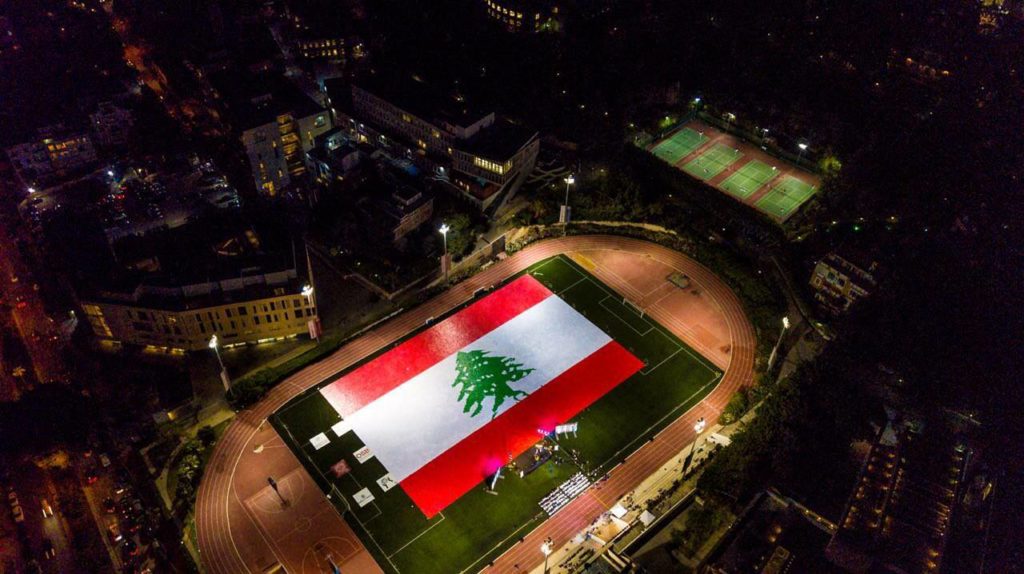
A group of students at the American University of Beirut set a Guinness world record in a project called “Share the Flag” by creating the largest notebook mosaic flag made of 60,000 notebook that were placed in the green field.
The event took place few days ago on May 9th and it took them around 24 hours to make it possible. Moreover, as a tribute to the Lebanese Army, the son of martyr Colonel Danny Harb (Rayan Harb), completed the Lebanese flag by placing the last red notebook.
The best part about the whole thing though was donating all of the notebooks that were used to create the Lebanese flag to a large number of public schools in Lebanon. It may sound insignificant to some but needful families will definitely appreciate any contribution to their kids education no matter how small it is.
Check out this time-lapse video showing how they did it.
The Ministry of Culture is organizing the 5th edition of La Nuit des Musées which will take place this Saturday April 14th. This year, 13 museums around Lebanon will be open for free to the public starting 5:00PM until late at night.
Free shuttles will be available at LibanPark parking in Mathaf area for people from Beirut who wish to visit the museums in the north and south, but reservations are mandatory through Virgin Ticketing box office to secure your place.
I highly recommend you use public transportation to visit the participating museums in Beirut by the way because it tends to get very crowded around them on this day.
Here’s the list of the participating museums:
MUSÉE NATIONAL DE BEYROUTH
de 17h00 à 23h00
“Mathaf”, rue de Damas
MIM, MUSÉE DES MINÉRAUX
de 17h00 à 23h00
Campus de l’innovation et du sport, Université Saint-Joseph
MUSÉE DE PRÉHISTOIRE LIBANAISE DE L’UNIVERSITÉ SAINT-JOSEPH
de 17h00 à 23h00
Rue de l’Université Saint-Joseph, quartier Monnot
VILLA AUDI
de 17h00 à 23h00
Rue St Nicolas, Achrafieh
MUSÉE NICOLAS IBRAHIM SURSOCK
de 17h00 à 00h00
Rue St Nicolas, Achrafieh
MUSÉE ARCHÉOLOGIQUE DE L’AUB
de 17h00 à 22h00
Université américaine de Beyrouth, Ras Beyrouth
MUSÉE DE LA BANQUE DU LIBAN
de 17h00 à 23h00
Locaux de la Banque du Liban, Sanayeh
SENTIER CULTUREL À SAÏDA
MUSÉE DU SAVON
PALAIS DEBANNÉ
KHAN SACY
KHAN EL-IFRANJ
KASR OLA
de 17h00 à 23h00
MUSÉE DU CATHOLICOSSAT DE CILICIE
de 17h00 à 23h00
Antélias
MUSÉE DES ORPHÉLINS DU GÉNOCIDE ARMÉMIEN “ARAM BEZIKIAN”
de 17h00 à 23h00
Jbeil
MACAM – MUSÉE D’ART MODERNE ET CONTEMPORAIN
de 17h00 à 23h00
Alita, Jbeil
MUSÉE ETHNOGRAPHIQUE DE L’UNIVERSITÉ DE BALAMAND
de 17h00 à 22h00
Koura
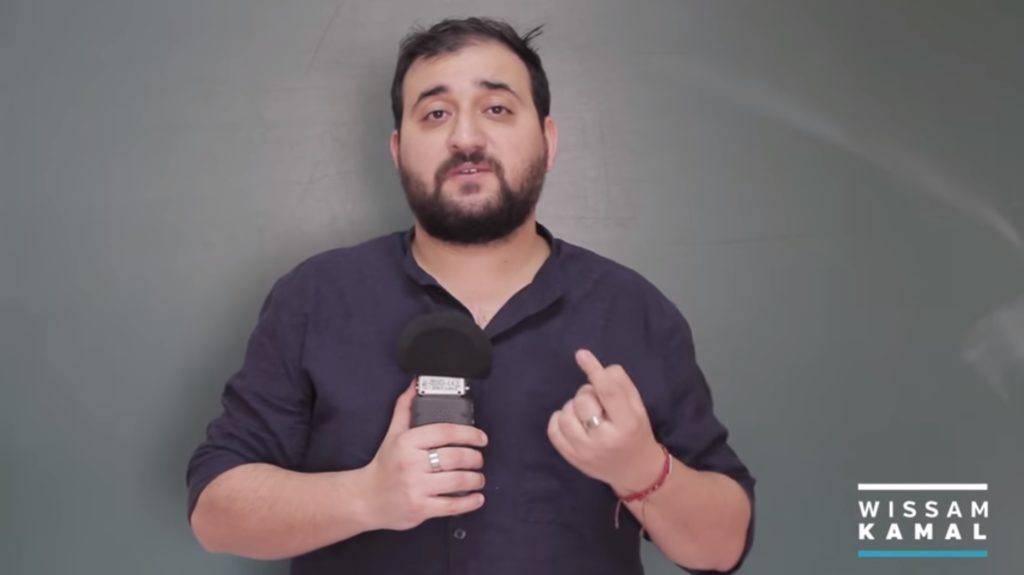
It’s always good to see someone putting effort and energy to help people with disabilities, and this is what Wissam Kamal is in his own way trying to do to make deaf people feel less left out when it comes to stand-up comedy shows.
Eight years ago, and in one of his very early shows, Wissam noticed a deaf girl laughing to his jokes by either reading his lips or when her friends where explaining them to her in sign language. So he made it a point to learn the language, which he has been doing for 8 years now, in order to use it to prepare a full show for deaf people and he is now few steps away from making this dream project come true and possibly going international with it since sign language can to some extent be understood everywhere.
With such hard work to make the show possible, Wissam is being such an inspiration and I really hope we get to see his performance the soonest.
Geography Now is a pretty well known channel on Youtube by vlogger Paul Barbato and it discusses the world’s geography, politics, and culture one country at a time. Paul simply goes through the world countries in alphabetical order and his channel is quite popular because he delivers good information in a fun way within reasonable time (usually 10-15 minutes).
Yesterday was finally the turn for Lebanon to be the subject of his latest episode and I think he did a nice job portraying our country. He even mentioned some stuff that I’ve never heard about before such as the Striped Hyena being our national animal. (Who knew?!)
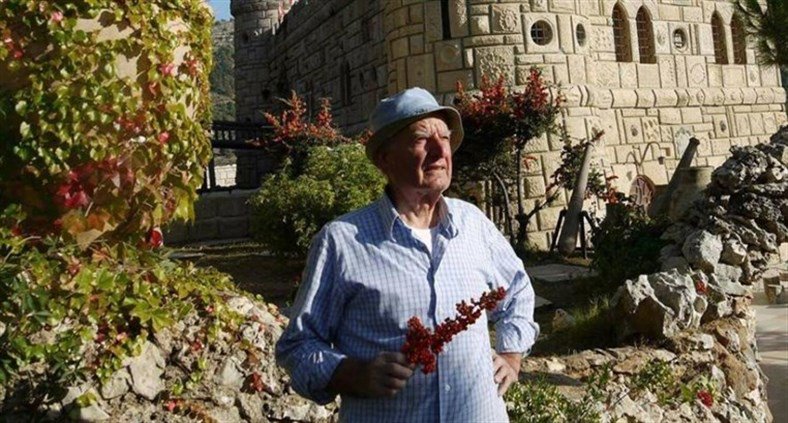
Moussa Maamari, the man who singlehandedly built the castle of his dreams known as Moussa Castle, passed away yesterday at 87 years of age.
Moussa Castle, located on a hill between Deir El Kamar and Beiteddine, had its first parts built and open to the public in 1967 but was only officially complete when the final part was done few year ago in 2012. The story behind the castle is both funny and inspiring since Moussa Maamari built it with his own hands just because he was mocked by his teacher at school for drawing a castle plan and by the girl he had crush on for expressing his feeling toward her.
At 14 years old in 1945, Maamari (originally Syrian) left his school and came all the way from Tartous to Saida to work with his uncle who was involved in renovating the city’s caste. And after several years of hard work between several jobs, he saved enough money to get married and buy a plot of land to build the castle of his dreams between 1962 and 1967.
The best part of the whole thing is that he insisted to show what he did to the girl who mocked him when he was young, so he kep searching for her over the years until he managed to make her visit the castle in 2009, and he made sure to make her get into it through the smallest door in order for her to kneel before him.
The castle is currently one of the main attractions in the Chouf area and is of course accessible to the public, with several museums inside housing a large collection of weapons and artifacts showing the life of Lebanese people in the past.