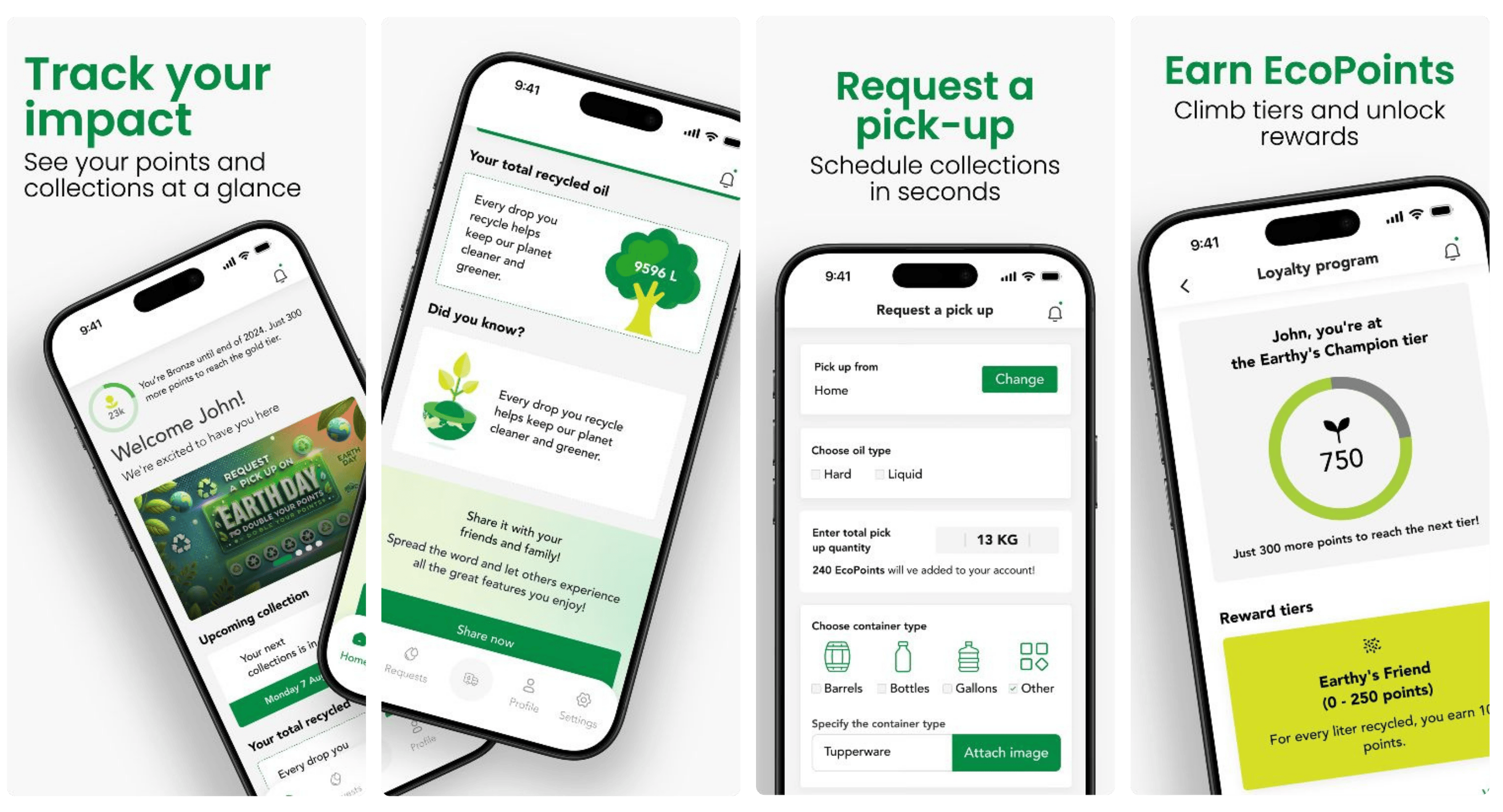
In today’s push for sustainability, POIL Group stands out as a regional leader in used cooking oil (UCO) collection and recycling. Based in Lebanon and operating across the MENA region, the company transforms waste oil from restaurants and households into sustainable biofuels, helping reduce carbon emissions and pollution.
I’ve been following POIL Group’s journey for a while. Their consistent focus on sustainability and community engagement really caught my attention. More recently, their new mobile app made me stop scrolling. It’s a smart, practical way to make recycling part of daily life.
For the hospitality sector, POIL Group offers UCO collection services with scheduled pickups and full environmental compliance. For households, the new app, which can also be used by restaurants, makes recycling effortless. You can schedule pickups, track collections, and earn loyalty points redeemable for rewards for every litre of used cooking oil you recycle.
POIL Group’s operations are ISCC-certified, ensuring transparency and adherence to international sustainability standards. Beyond business, the company also collaborates with NGOs and municipalities to expand awareness and make sustainability in Lebanon accessible to everyone. Their message is simple: Waste not Wasted.
By combining technology, community engagement, and sustainability, POIL Group is proving that environmental responsibility can start with something as simple as a bottle of used oil and grow into a cleaner, circular economy for all.
To learn more or start recycling your own used cooking oil, simply download the POIL app for iOS and Android.
If there’s one place that captures the soul of Lebanon, it’s the Chouf Cedar Reserve, a sanctuary of ancient trees, crisp mountain air, and timeless heritage. Nestled between the districts of Barouk, Maasser el Chouf, and Ain Zhalta, this reserve isn’t just a natural escape; it’s a piece of our national identity, quietly standing guard over centuries of history.
A Forest Older Than History Itself
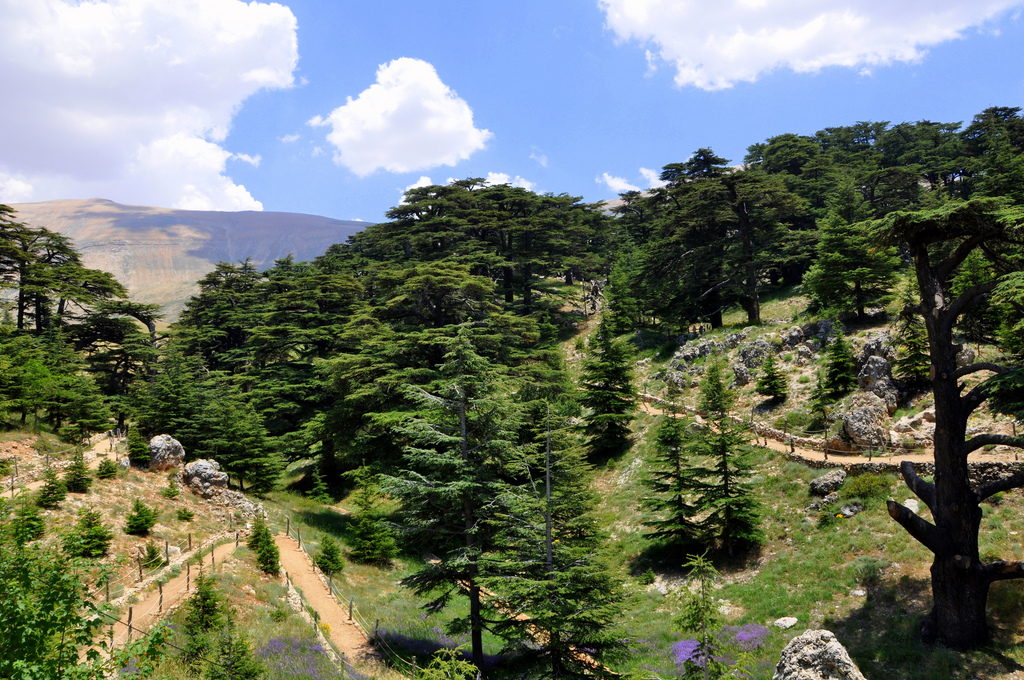
The Chouf Cedar Reserve is home to around 25% of Lebanon’s remaining cedar forests, making it the largest nature reserve in the country. Some of its trees are believed to be more than 2,000 years old, dating back to the era when Phoenician ships were built using this very wood. These are not just trees, they are silent witnesses to the rise and fall of civilizations, the echo of ancient hymns, and the scent of eternity itself.
Walking through the reserve, especially in Maasser el Chouf, feels like stepping into another world. The air is cooler, the wind carries the soft hum of nature, and the sight of those massive cedar trunks against the backdrop of snow-tipped mountains is something that humbles even the most city-hardened soul.
A Model for Eco-Conservation in Lebanon
Established in 1996, the reserve covers over 550 square kilometers and represents one of Lebanon’s greatest environmental success stories. Managed by the Al-Shouf Cedar Society, it’s a model of community-led conservation, where local villages play a vital role in protecting biodiversity and promoting eco-tourism.
What’s impressive is how the project balances preservation with livelihood. Locals produce organic honey, rose water, and traditional jams, all sourced sustainably from the area. It’s proof that protecting nature doesn’t mean disconnecting from it, it means finding harmony with it.
Hiking Through History
For hikers and nature lovers, the reserve offers a network of well-marked trails that stretch over 70 kilometers. Whether you’re an experienced trekker or just looking for a peaceful weekend walk, you’ll find a route that suits your pace.
One of the most rewarding experiences is hiking to the summit of Barouk Mountain, where you can see the entire Beqaa Valley on one side and the Mediterranean Sea on the other. On a clear day, you can even catch a glimpse of Mount Hermon shimmering in the distance.
The Symbol of a Nation
The cedar tree, proudly featured on the Lebanese flag, is more than just a national emblem, it’s a spiritual symbol of resilience. Despite centuries of deforestation, conflict, and neglect, these trees still stand tall. And the Chouf Cedar Reserve is the strongest reminder of that endurance.
It’s no coincidence that the reserve has become a place of quiet pilgrimage for Lebanese from all walks of life. Whether you go there to hike, meditate, take photos, or just breathe, the feeling is the same: a reconnection to something pure and enduring — something that reminds us of what Lebanon still has to offer when we take care of it.
Planning Your Visit
📍 Where: Between Barouk, Maasser el Chouf, and Ain Zhalta — about 2 hours from Beirut.
🕓 Best Time to Visit: Spring and early autumn, when the weather is cool and the landscapes are lush.
💡 Tip: Stop by Maasser el Chouf village for traditional food and incredible panoramic views of the cedar forest.
Looking for family activities in Lebanon that are both fun and educational? Just a short drive from Beirut, the Silk Museum in Bsous is the perfect spot for a weekend outing with kids. Surrounded by gardens and filled with history, the museum brings Lebanon’s silk heritage to life in a way that children and adults can enjoy together.
Why Visit the Silk Museum in Bsous?
The museum is housed in a beautifully restored silk factory, originally built in 1901. After decades of abandonment, it was transformed into the Silk Museum Lebanon and opened in 2000. Today, it showcases how silk production once played a major role in Lebanon’s economy and culture.
For families, the museum is more than just a history lesson—it’s a hands-on experience where kids can see, touch, and learn.
Family Activities at the Silk Museum Lebanon
Here’s why the Silk Museum is one of the best places to visit with kids in Lebanon:
🐛 Watch live silkworms feeding on mulberry leaves and spinning cocoons.
🧵 Learn the silk-making process step by step, from cocoon to thread.
🪡 Discover traditional weaving looms used in Lebanese villages.
👗 See historic silk garments once worn by Lebanese families and royalty.
🌳 Enjoy the gardens full of mulberry, apricot, and olive trees—great for kids to explore after the tour.
Educational and Fun for Kids
Children love watching the transformation of silkworms into silk. It’s like a mini science class combined with a history lesson—without the classroom! The interactive approach makes it one of the top educational activities for kids in Lebanon.
Seasonal Exhibitions and Workshops
From May to October, the museum also hosts exhibitions of silk art and textiles from countries along the Silk Road, as well as workshops and guided tours. Families can shop for handmade crafts at the boutique or simply enjoy a relaxed stroll through the gardens.
Practical Visitor Information
📍 Location: Bsous, Aley district (about 20 minutes from Beirut)
🕒 Opening hours: May–October, usually Tuesday–Sunday, 10 am – 6 pm (closed Mondays)
⏳ Duration: Plan for about 1–1.5 hours
👟 Tip: Wear comfortable shoes for the gardens, and bring a camera—the kids will love taking pictures of the silkworms!
A Family Outing With a Lebanese Touch
If you’re searching for things to do with kids near Beirut, the Silk Museum in Bsous is a wonderful choice. It combines history, nature, and culture in a way that entertains and educates the whole family.
Instead of another mall trip, treat your kids to a truly Lebanese experience where they can connect with the country’s heritage and discover the magic of silk.
Lebanon is packed with diverse and enchanting hiking routes that offer everything from spiritual valleys to serene forests and dramatic mountain summits. Here are some of our most beloved trails:
1. Lebanon Mountain Trail (LMT)
Overview: A 470 km long-distance trail stretching from Andaket in the north to Marjayoun in the south, cutting through 76+ towns and villages with varied terrain.
Experience: Hike in segments or tackle the entire route, staying in charming guesthouses along the way.
Highlights: Traverse through Qadisha Valley and Cedars of God; explore side trails like Baskinta Literary Trail, Bkassine Pine Forest, or the Valley of Hell for dramatic landscapes and cultural depth.
2. Qadisha Valley (Kadisha Gorge)
Why Go: A UNESCO World Heritage gem filled with cliffside monasteries and lush scenery—one of Lebanon’s most spiritual and scenic hikes.
Insider Tip: Stay at Karaz or Beit Mirna guesthouses in Ehden for easy access and local hospitality.
3. Cedars of God & Bcharre Forest
Significance: Walk among ancient cedar trees that are symbols of Lebanese heritage—some dating back millennia.
Bonus: Combine with a visit to the Khalil Gibran museum in Bcharre for a cultural twist.
4. Al Shouf Cedar Nature Reserve
Scope: The largest natural reserve in Lebanon at 550 km², hosting cedar forests, 200 bird species, and rich biodiversity.
Why Hike: Trails of varying difficulty weave through serene cedar groves, panoramic viewpoints, and abundant flora and fauna.
Tannourine: Dense cedar forest and dramatic terrain—perfect for nature lovers.
Baatara Gorge: A jaw-dropping waterfall plunging 255 m into a limestone sinkhole—best experienced in spring when meltwater peaks.
6. Baskinta Literary Trail
Trail Profile: A 22–24 km themed route celebrating literary figures like Mikhail Naimy and Amin Maalouf—combined with beautiful views of Mount Sannine.
Why It Stands Out: Blends cultural immersion with scenic hiking and even offers snowshoeing in winter.
7. Bkassine Pine Forest
Landscape: Among Lebanon’s largest pine forests—ideal for peaceful walks Amid Jezzine and Niha.
Amazing Views: The 22 km trail from Jezzine to Niha offers sweeping views of the Mediterranean and lush valleys.
8. Hidden Gems & Nature Trails
Chouwen Trail to Blue Lagoon: In Jabal Moussa, a shaded moderate hike ending in a turquoise swimming spot.
Bentael Nature Reserve: Near Byblos, this reserve offers 18 well-marked trails through pine-oak woodlands—great for families.
Mseilha Walkway: A relaxed, scenic path near Batroun, with views of the historic Mseilha Fort—beginners friendly.
Kfour Springs Trail: In Keserwan, a 6 km easy hike through multi-tree forests with coastal vistas—ideal for a nature break close to Beirut.
Iron Oak Forest, Akkar: A golden-tinged forest trail through towering iron oaks—beautiful at sunset.
Ouyoun Orghosh & Sawfar: Perfect autumn hikes—filled with fall colors, springs, and cultural immersion.
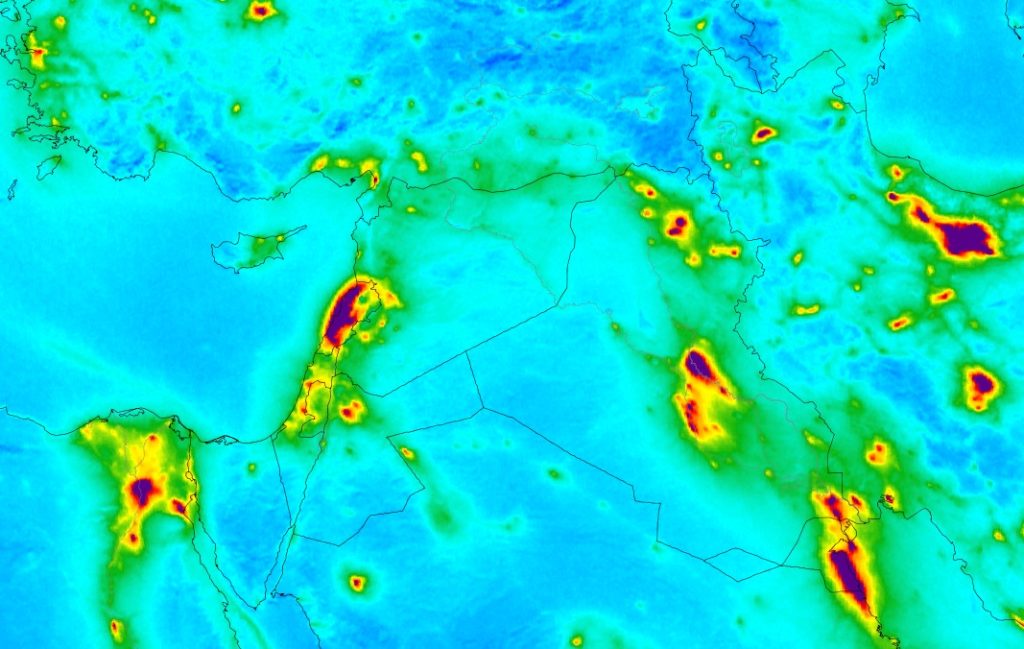
The European Space Agency (ESA) recently released several maps showing air pollution around the world after measuring the level of nitrogen dioxide over major cities using their Copernicus Sentinel-5P satellite.
This gas is an air pollutant that comes from traffic and the combustion of fossil fuel in industrial areas. And needless to say, it causes health issues by irritating the lungs and causing respiratory problems. The data was collected between April and September 2018 and the above image shows the result for part of the Middle East.
As you can see, almost all of Lebanon has very high levels of NO2 especially over the coast. And since we are by no means an industrial nation, the polluted air definitely comes from the massive number of cars and the diesel generators everywhere around the coutnry.
On the other hand, the government is as passive as ever with no plan in sight to make things better. In fact the best thing they have in mind now is to build garbage incinerators which they believe are eco-friendly. So expect the next results from the Copernicus to have Lebanon on the map replaced with a piece of shit. Literally.
One of the things I really struggle with every weekend is coming up with a new place to take my kid to for some outdoor fun. The options in Beirut are quite limited due to the lack of public spaces/gardens so most of the times we end up at a closed playground, which I absolutely despise, and sometimes at some place up in the mountains when the weather permits.
However, I’ve been lately thinking that the Municipality of Beirut actually does have the capacity to compensate for this lack of public space during the weekends and holidays at minimum, and they can seriously focus on this instead of spending hundreds of thousands of dollars on what they label as attempts to revive Nejmeh square.
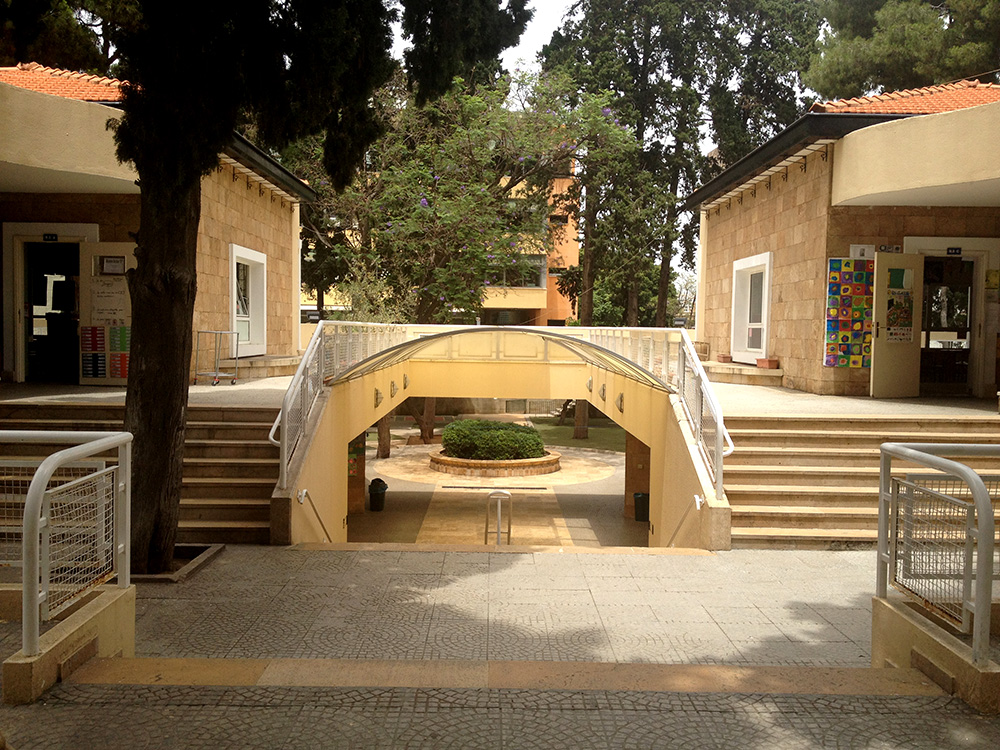
Beirut has a lot of big schools such as Lycée Abdelkader, La Sagesse, Makassed and International College to name a few, in addition to many public schools as well, and most of them have large fields with kids playgrounds. So why not can’t the municipality agree with a couple of large schools in every area to open their doors during the weekends in order for the people to enjoy a casual troll or jog away from the polluted streets or even bring their kids to play and spend some time.
I know the whole thing is not as simple as just opening the schools’ doors and it definitely needs money and human resources to make it happen, but the municipality can take it as an opportunity to provide jobs for part timers who are willing to participate. Moreover, schools can also benefit by offering to rent small kiosks for business owners for example.
So yes, instead of pouring money into pointless projects and initiatives, how about we simply try to make use of what’s already available?
“UN Listens” is one of the latest initiatives by the United Nations in Lebanon, and it aims to engage the Lebanese citizens in making positive change to their communities and environment. For several years now, the work of the UN in our country has been associated with exclusively helping the Syrian refugees, but in fact they’re committed to their development projects for Lebanon and the UN Listens campaign is one example.
The UN is now calling Lebanese citizens to share their ideas on how they can make their communities better through a dedicated website www.unlistens.org, and the the authors of the best 10 letters with the most creative suggestions will have the opportunity to discuss their ideas with UN experts which can assist them realizing solutions for their environment.
So if you feel you lack the necessary support to voice a suggestion that can positively impact your community, make sure to write a letter through the UN Listens website presenting your idea no matter how big or small it is.
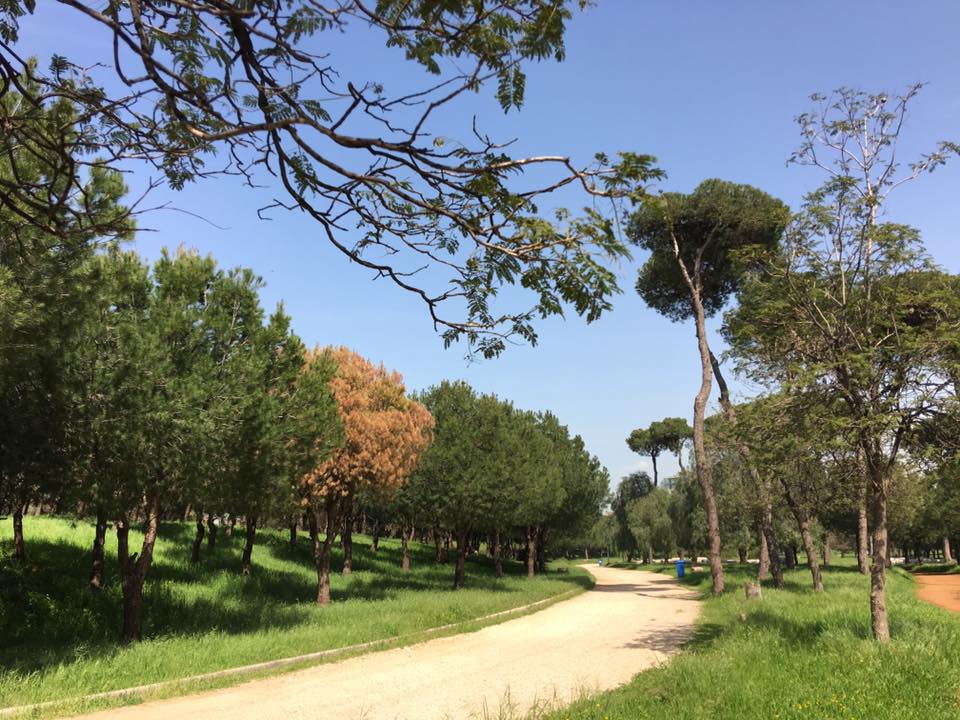
Horsh Beirut has been closed down by the Municipallity of Beirut for several month now ever since a disease spread among the pine trees there and was threatening the whole area. Fortunately, the municipality back then took the matter seriously and closed down the park to treat the issue by cutting down and burning the infected trees, which eventually resulted in containing the disease.
Accordingly, Horsh Beirut has been officially opened again to the public as of yesterday except for some areas where the municipality is still working to clear the invasive insects.
For those interested, the park will be open from 7AM till 1PM on weekdays, and from 7AM till 7PM on weekends. Barbecue and Shisha are of course still forbidden inside, and thank god for that!
Earlier last week, London’s Heathrow Airport issued a list of 50 global airlines ranked according to how environmentally friendly they are, and our national carrier Middle East Airlines turned out to be among among the worst coming in the 48th position.
The airlines in the list were assessed based on 7 categories among which are arrival times, efficient landing approaches, nitrogen oxide emissions, and noise pollution. Therefore, this of course has nothing to do with travelers experience on board but rather with the footprint that airplanes flying out of Heathrow Airport leave on the environment.
The only two airlines that scored worse than MEA were Kuwait Airways and Israel’s El Al, while British Airways topped the ranking followed by Aer Lingus, Etihad Airways, Scandinavian Airlines System, Finnair and American Airlines.
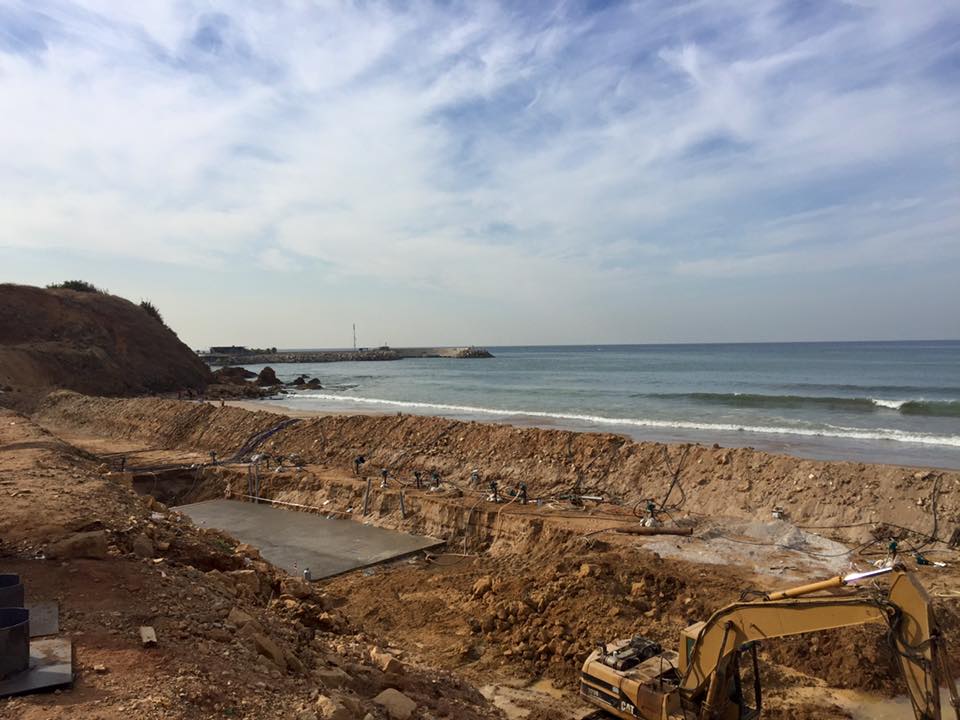
Many activists have been sharing photos since Thursday of excavations works currently happening at Beirut’s last public beach in Ramlet El Bayda but nobody was able to explain their purpose yet.
Over the last couple of years there has been a lot of talk about the area being a private property and that a resort will be built there by Achour Development. However, right before the previous municipal council’s term ended last spring, it was announced that the municipality of Beirut will be claiming back the beach and surrounding land in order to keep it accessible to the public. News about the whole thing then eventually stopped circulating until these photos started surfacing online.
Knowing that the “Byeirteh” list’s promise when they were elected was to keep Beirut for its people, I hope they were considering Ramlet El Bayda a part of the capital when they made their promise back then.
In all cases, I tried to reach both of Ziad Chbib (Beirut governor) and Jamal Itani (Beirut mayor) to know the purpose of these excavation works and will definitely post an update if they reply to me.