+961

A Lebanese Blog

Tag: Beirut

  • 80 Years of Middle East Airlines: Lebanon’s Cedar Still Soars

    Lebanon’s national carrier, Middle East Airlines (MEA), has officially turned 80 years old, and what a journey it’s been! Eight decades of highs and lows, turbulence and triumphs, all tied together by one constant: the unmistakable Lebanese spirit of perseverance.

    From its humble beginnings in 1945 to its transformation into a modern regional leader, MEA’s story mirrors Lebanon’s own, full of challenges, comebacks, and an unshakable pride that never stops flying.

    From Beirut’s Golden Age to Global Recognition

    MEA was founded in 1945 by Saeb Salam, with support from BOAC (what we know today as British Airways). With just a few aircraft, the airline began connecting Beirut to nearby capitals like Damascus, Cairo, and Nicosia, before quickly expanding to Europe and beyond.

    By the 1960s, MEA had become one of the Middle East’s most respected airlines. The company’s jets were sleek, the service was world-class, and Beirut’s airport buzzed with energy. MEA didn’t just connect cities, it connected cultures. Flying MEA was synonymous with elegance and Lebanese hospitality.

    But as we know, Lebanon’s golden age was soon interrupted.

    Surviving the Storm: MEA During the Civil War

    When the Lebanese Civil War erupted in 1975, MEA faced unimaginable challenges. Beirut Airport was hit repeatedly, aircraft were destroyed on the ground, and normal operations became impossible.

    Yet, MEA never disappeared. While many other airlines might have gone bankrupt or relocated for good, MEA adapted. The company set up makeshift offices, re-routed flights through foreign airports, and did whatever it took to keep Lebanon connected to the world, even if it was just a few destinations at a time.

    Through those 15 years of chaos, MEA became a symbol of national endurance. The airline didn’t just survive the war, it embodied Lebanon’s refusal to give up.

    Rebuilding the Dream: The Mohamad El-Hout Era
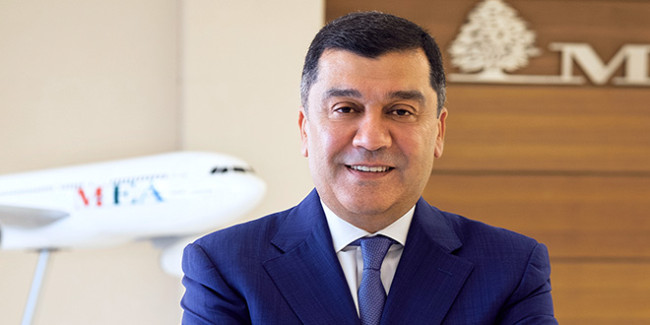
    When peace finally returned in the early 1990s, MEA was in rough shape, financially drained, overstaffed, and flying an aging fleet. The company was in desperate need of leadership and a clear vision. That’s when Mohamad El-Hout stepped in.

    Appointed as Chairman and Director General in 1998, El-Hout faced what seemed like an impossible task: rescuing a national airline at a time when the country itself was struggling to rebuild.

    What followed was nothing short of remarkable.

    El-Hout led a bold restructuring plan that focused on modernization, efficiency, and sustainability. Under his leadership:

    • MEA streamlined its operations, cutting unnecessary costs and optimizing staff while preserving jobs wherever possible.
    • The fleet was completely renewed, moving to a modern all-Airbus lineup, safer, more efficient, and environmentally friendly.
    • Service quality was overhauled, returning MEA to its reputation for Lebanese hospitality and professionalism.
    • In 2012, MEA joined the SkyTeam Alliance, alongside airlines like Air France, KLM, and Delta, a milestone that reestablished Beirut as a respected international hub.
    • The company also invested in a state-of-the-art training center, new headquarters, and the elegant MEA Cedar Lounge at Beirut-Rafic Hariri International Airport, now considered one of the best in the region.

    Even as Lebanon entered one crisis after another, political instability, economic collapse, a pandemic, and even the Beirut Port explosion, El-Hout’s steady leadership kept MEA flying. While other national institutions struggled to survive, MEA managed to stay operational, profitable, and proudly Lebanese.

    The Cedar That Refuses to Fall

    MEA’s resilience isn’t just history, it’s still happening.

    During the 66 Days War in 2024, when tensions and airstrikes struck dangerously close to Beirut-Rafic Hariri International Airport, MEA once again proved its commitment to Lebanon. Despite damage in nearby areas and repeated security scares, the airline continued to operate, safely evacuating passengers and maintaining vital connections with the outside world.

    It was a powerful reminder that MEA isn’t just a business, it’s a lifeline. When others pause, the Cedar keeps flying.

    Eighty Years Later: The Pride of Lebanon

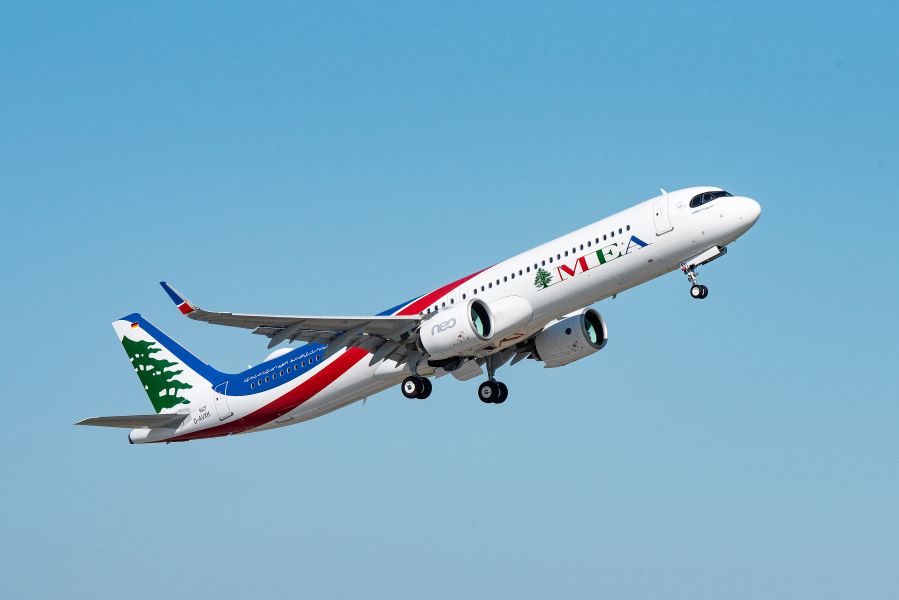
    Today, MEA operates one of the youngest and most modern fleets in the Middle East, serving destinations across Europe, Africa, and the Gulf. Its aircraft, with their blue-and-white livery and proud Cedar tree, remain an emotional sight for many Lebanese traveling abroad.

    Because for us, MEA isn’t just an airline. It’s home in the sky.

    Every takeoff carries stories of reunions, migrations, returns, and new beginnings. Every landing in Beirut feels like coming back to warmth, chaos, and heart.

    As MEA celebrates 80 years of flying, we’re reminded that no matter how many storms Lebanon faces, the Cedar still finds a way to rise above the clouds.

    So here’s to Middle East Airlines, and to the people behind it, especially Chairman Mohamad El-Hout, who turned resilience into strategy and crisis into progress.

    May the next 80 years be smoother, brighter, and as proudly Lebanese as ever.

  • La Nuit des Musées 2025 in Lebanon

    After a six-year break, La Nuit des Musées is officially back in Lebanon this summer! Today, July 29, 2025, museums across Beirut and several other cities will open their doors to the public free of charge from 7:00 PM to 11:00 PM.

    This initiative is organized by the Lebanese Ministry of Culture in collaboration with the Directorate General of Antiquities, and it’s a fantastic opportunity for residents and tourists alike to rediscover the country’s rich heritage.

    List of Participating Museums:

    📍 Beirut Museums

    • National Museum of Beirut
    • Nicolas Ibrahim Sursock Museum
    • MIM Museum (Mineral Museum)
    • AUB Archaeological Museum
    • AUB Geology Museum
    • Museum of Lebanese Prehistory
    • BDL Bank Museum
    • Villa Audi – Mosaic Museum
    • Nuhad Es-Said Private Museum (Pavillon Nuhad Es-Said)
    • USJ Oriental Library
    • French Institute Gallery – Beirut

    📍 Jounieh

    • USEK Archaeological Museum

    📍 Byblos (Jbeil)

    • Aram Bezikian Museum
    • Byblos Site Museum (Byblos Castle)
    • MACAM – Modern and Contemporary Art Museum
    • Memoire du Temps – Fossil Museum
    • Fondation Louis Cardahi – LAU Byblos

    📍 Tripoli

    • Citadel of Saint Gilles Museum (Tripoli Castle)

    📍 Saida

    • Debbane Palace
    • Khan el Franj
    • The Soap Museum
    • Hammam Al Jadeed
    • Khan Sacy

    Whether you’re into archaeology, fine art, science, or contemporary installations, this is your chance to explore Lebanon’s cultural treasures in a whole new way at night and totally for free.

    This night is also a great opportunity to bring the kids, go on a fun educational outing with friends, or enjoy a different kind of date night. La Nuit des Musées isn’t just about exhibits, it’s a celebration of our shared culture, creativity, and resilience.

  • Ziad Rahbani (1956–2025): Lebanon Bids Farewell to a Cultural Icon

    Lebanon woke up to heartbreaking news on July 26, 2025. Ziad Rahbani, one of the country’s most influential cultural figures, has passed away in Beirut at the age of 69. His departure leaves a void that will be deeply felt by generations who grew up listening to his music, quoting his plays, and admiring his courage to speak truth to power.

    The Genius Behind the Curtain

    Born in Antelias, Lebanon, in 1956, Ziad Rahbani was the son of two musical legends: Fairouz, the voice of Lebanon, and Assi Rahbani, one half of the Rahbani Brothers duo that shaped Arabic music throughout the 20th century. From the very beginning, Ziad was destined for artistic greatness — but he never relied solely on his family name. Instead, he carved out his own, often controversial, legacy as a composer, playwright, pianist, satirist, and social commentator.

    Most Notable Works

    Ziad’s musical and theatrical works blended jazz, classical Arabic, and Western influences, often laced with sharp political and social critique. Some of his most iconic plays include:

    • Sahriyyeh (1973) – his first play, written when he was only 17.
    • Bennesbeh La Bokra Chou? (1978) – a cult classic portraying post-civil war disillusionment.
    • Film Ameriki Tawil (1980) – a biting critique of Lebanese societal contradictions.
    • Shi Fashil (1983) – mixing humor and tragedy in a uniquely Ziad way.

    In music, his compositions for Fairouz stand among the most beloved in modern Arabic music, including:

    • El Bosta
    • Kifak Inta
    • Habaytak Ta Nseet El Noum

    Ziad’s jazz-infused solo works, such as “Bi Ma Enno” and “Abou Ali”, broke the mold of Arabic pop, challenging musical norms and thrilling fans across the Arab world.

    A Complicated Yet Tender Bond with Fairouz

    Despite political and personal differences that were sometimes played out in the public eye, Ziad always maintained a profound artistic connection with his mother, Fairouz. Their collaborations resulted in timeless songs that became part of Lebanon’s collective memory. For many, Ziad was not just Fairouz’s son, but the artist who redefined her musical style in the late 1970s and 1980s, giving her voice a new edge that resonated with younger generations.

    Personal Life & Politics

    Ziad was famously outspoken, politically aligned with leftist ideologies and fiercely critical of sectarianism, corruption, and the hypocrisy he saw in Lebanese society. He remained deeply connected to Beirut, often seen in Hamra cafés, scribbling notes or engaged in fiery discussions. His life was marked by moments of solitude, brilliance, and contradiction — traits that only deepened his mystique.

    Despite moments of withdrawal from public life, Ziad never stopped creating, never stopped thinking, and never stopped provoking. Whether through a sarcastic radio interview or a surprise appearance at a jazz concert, he always had something to say — and people always listened.

    Legacy That Lives On

    Ziad Rahbani was not just an artist. He was a mirror, held up to a society struggling to find its way. His work gave voice to the unheard, mocked the powerful, and offered comfort to the broken. In a country that has long wavered between chaos and resilience, Ziad was a constant — raw, real, and unapologetically Lebanese.

    As Lebanon mourns this giant of culture, we remember his words, his music, and the unforgettable laughter and tears he brought into our lives.

    Rest in peace, Ziad. Your voice will echo through the alleyways of Beirut for generations to come.

  • Lebanon’s Forgotten Train Stations – A Journey Through Time

    Lebanon’s historic railway network was once the artery of regional travel, connecting Beirut to Damascus, Haifa, Tripoli, Rayak, and beyond. Established under Ottoman rule in the late 19th century, it remained operational until the mid‑1970s, when the civil war and rising car ownership brought its decline.

    Beirut – Mar Mikhael Station

    • History & architecture: Opened in 1895, this French-designed station featured high ceilings, a mechanical clock, three platforms, repair facilities, and a rail yard. Services ceased in 1975/76.
    • Post-war revival:
      • In 2014, it was transformed into a popular outdoor bar and events venue. A rusting steam locomotive serves as a DJ booth, blending nostalgia with contemporary urban culture.
      • In 2023, UNESCO and Italy pledged €2 million for its restoration.

    Tripoli Station (El‑Mina)

    • Landmark origins: Built in 1911, this station linked Lebanon with Homs and served as the terminus for the Orient Express during the 1920s–40s.
    • Current state:
      • A war-scarred but hauntingly beautiful site, housing vintage German G7 and G8 locomotives (1895–1906), decaying platforms, and graffiti-adorned walls.
      • It briefly reopened in 2011 for public visits but remains largely neglected.

    Rayak Station – Bekaa Valley

    • The railway hub: Opened in 1895, Rayak was Lebanon’s largest station—featuring repair shops, workshops, a hotel, telecom offices, lounge areas, and even a post office and military center.
    • Decline & proposals:
      • During WWII, it served the French Air Force; during the Lebanese Civil War it was seized by Syrian forces, with some buildings used as detention centers.
      • A proposal in 2010 to convert it into a railway museum failed due to lack of political support.

    Other Stations Along the Coast & Mountains

    • Jamhour & Araya: Jamhour station now serves as a private home; Araya station is draped in greenery and occasionally used as a film location.
    • Aley & Sofar:
      • Aley’s station has been converted into an office for railway authorities.
      • Sofar station which is located near the Grand Sofar Hotel.
    • Bhamdoun Station:
      • Built in 1898, it was central to local development and tourism. It closed in 1983, and bullet-marked ruins remain beside a new highway.

    Suggested Itinerary for Railway Explorers

    1. Beirut Mar Mikhael – start with urban history, nightlife, and architecture.
    2. Drive out the Damascus Highway – passing through Jamhour, Araya, Sofar, Aley, and Bhamdoun for contrasting ruins and hidden stories.
    3. Rayak Station – finish in Bekaa, where the magnitude and tragic industrial heritage linger most visibly.
    4. Tripoli Station – if heading north from Beirut, explore El‑Mina’s overgrown platforms and Orient Express relics.

    Photos via SOBeirut and Moovtoo

  • Coming Home: Top Things to Do in Lebanon This Summer for Returning Expats

    There’s nothing quite like the feeling of touching down at Beirut airport after months (or years) away. The chaos of baggage claim, the first whiff of sea air mixed with car exhaust, the heartfelt hugs waiting outside, it’s messy, it’s beautiful, and it’s home.

    For all the expats making their way back to Lebanon this summer to reconnect with family, we know the trip is about more than just good food and beach tans, it’s about memories, emotions, and refreshing that complicated but unbreakable bond with this little slice of the Mediterranean. Between visiting your teta, endless coffee rounds, and awkward political debates at family lunches, here are some ideas to make the most of your summer homecoming.

    1. A Beach Day That Actually Feels Like Vacation

    Lebanon’s coastline is packed with options, but this year, do yourself a favor and splurge on a full relaxing beach day. Skip the overcrowded “scene-y” places and opt for a day at Colonel Reef in Batroun or Nowhere Beach in Chekka. Good music, decent food, and an actual chance to unwind without feeling like you’re at a fashion show. Bonus points if you end it with a sunset drive along the coast.

    2. Revisit the Mountains – But With a Twist

    Yes, you’ve done the classic Faraya and Broumana circuit. This time, try Ehden’s Horsh Ehden Nature Reserve for a peaceful walk in cedar forests or hit the Darb El Mseilha trail for an easy scenic hike. Or just escape to Douma for its calm vibes, village life, and unbeatable saj breakfast. Trust us, your lungs will thank you.

    3. Old Beirut Never Gets Old

    Take a nostalgia-fueled stroll in Gemmayzeh and Mar Mikhael during daytime when it’s quieter, grab a man’oushe from Furn Beaino, sip a coffee at Sip or Urbanista, and walk all the way down to the Beirut Port memorial. It’s painful, yes, but grounding. Beirut’s heartbeat remains chaotic but alive, and sometimes we all need to walk through it to remember.

    4. Go Full Tourist at Least Once

    Even if you grew up here, be a tourist for a day. Spend it at Baalbek’s Roman ruins, wander the ancient souks of Byblos, or take a boat trip to Tyre’s Al Bass Archaeological Site followed by seafood by the shore. Lebanon’s beauty is loud and proud, let yourself be charmed all over again.

    5. Sunset Arak With Old Friends

    It’s not summer in Lebanon if you’re not clinking arak glasses as the sun sets. Beit el Qamar in Deir el Qamar, Tawlet Ammiq, or a simple rooftop in Achrafieh, anywhere works, as long as the company is good. Laugh, reminisce, gossip a little, and for a few hours, forget the distance you’ll go back to.

    Bonus Tip: Be Gentle With Yourself

    Summer in Lebanon comes with its share of overwhelming moments, crowded roads, power cuts, heated political talk. But it’s also full of soul-reviving sunsets, hugs that melt years away, and that special feeling of belonging. Take it slow. Soak it all in. Remember why no matter where we go, Lebanon always calls us back.

    Wishing all the returning expats a summer filled with warmth, laughter, and the unique chaos only Lebanon knows how to deliver.

    If you have your own summer rituals in Lebanon, tell us about them in the comments below, let’s make this a community guide!

    photo via beirut-today.com

  • Lebanon’s October Revolution – Where And How Do The Others Live?

    I admit I have never participated in a demonstration prior to the October 17th uprising. I didn’t think any of the political movements represent me in 2005, and I didn’t believe the civil society was capable of bringing real change with the 2015-16 protests.

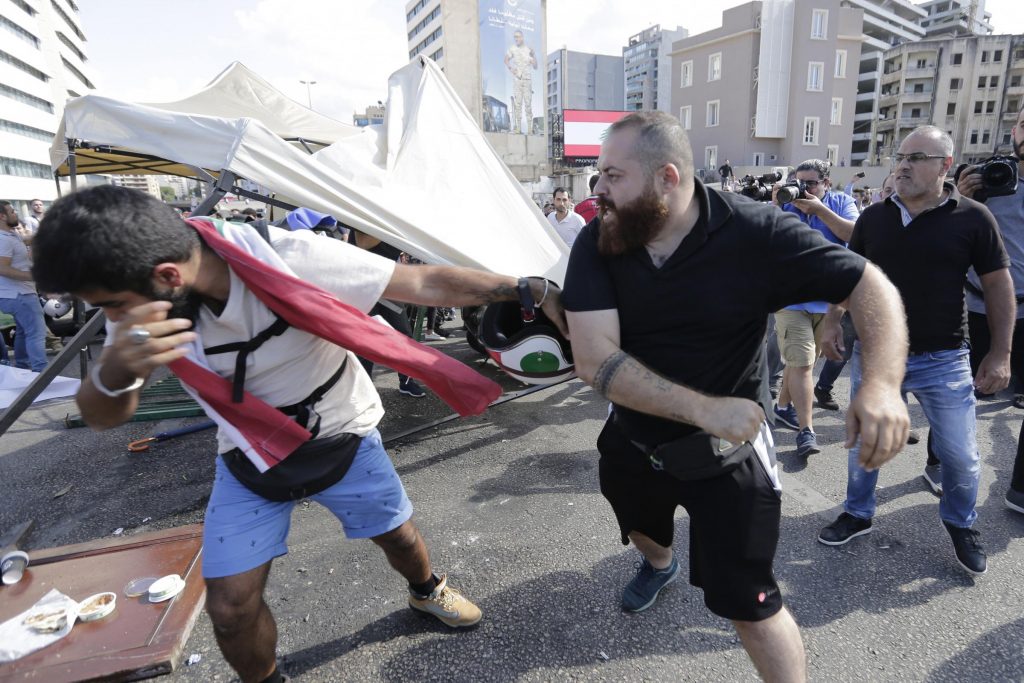
    This however all changed two weeks ago when I decided to join the masses in Riad El Solh and The Martyrs’ Square to protest against the whole ruling class in Lebanon after watching people from all social levels and religions united against the politicians. For once, it felt like people were liberated from their politicians especially in some areas that were always thought to be fully controlled by ruling parties. For instance, people in the north rioted against Tripoli’s wealthy politicians, while some villages in the south dared for the first time in 30 years to revolt against the Hezbollah-Amal duo and go as far as cursing Nabih Berri who has always been regarded as second to god in the region.

    Yet, and in this unique moment in our recent history, some sheep-like people from all communities have still chosen to keep acting submissive to their political leaders and conform to their will no matter what, and at this time I seriously don’t understand it.

    Where and how do these people live? Aren’t they suffering in this country the same way as everyone else?

    Are they getting 24/7 electricity at their homes and don’t pay extra for a generator subscriptions like everyone of us?

    Do they get immediate admission to any hospital without paying a hefty deposit or calling their za3im?

    Aren’t they paying the same taxes like us? Or are they getting anything in return if they do?

    Don’t they feel forced to bribe government employees to get their things done sometimes?

    Were money changer providing them with dollars at the official rate or at 1,600 and 1,700 like the rest of us?

    Do these people find easy to buy an apartment nowadays? Are housing loans open to them?

    Do they have decent internet connections at home?

    When it rains continuously for two hours, do they get flooded in their cars like everyone else on the roads or they usually get immediately teleported to their homes?

    Do they feel like their salaries are worth less and less every year like everyone of us or are their savings magically increasing?

    Do they get free schooling for their kids?

    I can keep going but seriously, it is 2019 and w are all sharing this land called Lebanon, why do people still sheepily follow politicians instead of rallying behind qualified people…? Despite all this, it is ironic that the protesters’ demands are for the greater good of everyone, including those hardcore fans of the current political leaders.

    With 14 days since the uprising, PM Saad Hariri resigned yesterday and everybody seem clueless about what comes next. Whatever the outcome is though, let’s hope for less poor people beating each other and more wins against this rotten ruling class.

  • Uber and Careem No Longer Allowed to Pick Up Passengers from Beirut Airport

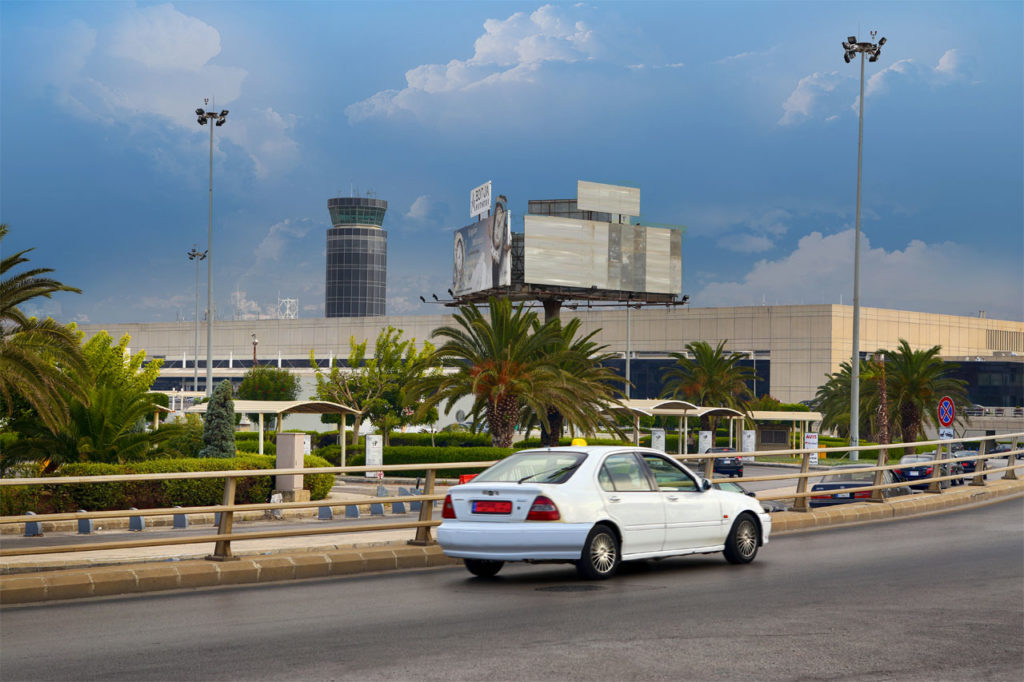
    Several news websites reported last week that a new decision (number 1/247) was issued by the Minister of Transport that aims to organize the operation of Taxi cabs at the airport, an urged taxi drivers to abide with it as of the first of April. No details were provided about that decision and the ministry website didn’t have any information, so it all sounded vague.

    A few days later I started hearing about people arriving to Beirut Airport not being able to meet their designated drivers at the exit and I just made sure yesterday it was because of that decision.

    A friend of mine arrived last night and tried to use Careem, but a few minutes later the driver called and told him he can no longer go beyond the army check point (around 700m away from the airport entrance), and that he should meet him there to pick him up. With too much distance to walk, my friend decided to simply cancel the ride and book one of the official airport taxi cars, except that they told him it will cost “around $50” to drive him to Dekwane which is ridiculously exorbitant, so he just said thanks and called one of his relatives to come take him instead.

    So whatever that decision states, it essentially no longer allows taxi river to pick up their arriving passengers from the parking lot as before in order to force people to use the official airport taxi drivers who are infamous for charging very high amount for a few kilometers rides. Therefore, in case you are arriving to Beirut anytime soon, make sure to arrange for a friend or relative to pick you up if you don’t want to bear unnecessary charges.

    Keep in mind that our so called tourism season should start in a few weeks from now, and this decision is basically the best way to kick it off!

    Update (April 5th 2019):

    Private taxi companies can pick up passengers from the airport only if they apply for a special permit from the syndicate of Lebanese taxi drivers for every ride they want to make.

    The permit should include the passengers name along with their flight details in order not to be used more than once.

    Update 2 (April 5th 2019):

    Minister of Transportation Youssef Fenianos just reversed his decision, so taxi drivers can pick up incoming passengers from the parking lot just like before.

  • La Nuit des Musées 2019 is Taking Place This Saturday April 6th

    The Ministry of Culture is organizing the 6th edition of La Nuit des Musées this Saturday April 6th. And this year, 14 museums around Lebanon will be open for free to the public starting 5:00PM until late at night.

    Free shuttles will be available at LibanPark parking in the Mathaf area in Beirut for people wish to visit the museums in the north and south, but reservations are mandatory through Virgin Ticketing box office to secure your place.

    I highly recommend you use public transportation to visit the participating museums in Beirut by the way because it tends to get very crowded around them on this day.

    Here’s the list of the participating museums:

    MUSÉE NATIONAL DE BEYROUTH
    de 17h00 à 23h00
    “Mathaf”, rue de Damas

    MIM, MUSÉE DES MINÉRAUX
    de 17h00 à 23h00
    Campus de l’innovation et du sport, Université Saint-Joseph

    MUSÉE DE PRÉHISTOIRE LIBANAISE DE L’UNIVERSITÉ SAINT-JOSEPH
    de 17h00 à 23h00
    Rue de l’Université Saint-Joseph, quartier Monot

    VILLA AUDI
    de 17h00 à 23h00
    Rue Georges Choueri, Achrafieh

    MUSÉE NICOLAS IBRAHIM SURSOCK
    de 17h00 à 23h00
    Rue St Nicolas, Achrafieh

    MUSÉE ARCHÉOLOGIQUE DE L’AUB
    de 17h00 à 22h00
    Université américaine de Beyrouth, Ras Beyrouth

    MUSÉE DE LA BANQUE DU LIBAN
    de 17h00 à 23h00
    Locaux de la Banque du Liban, Sanayeh

    MUSÉE DU CATHOLICOSSAT DE CILICIE
    de 17h00 à 23h00
    Antélias

    SENTIER CULTUREL À SAÏDA
    MUSÉE DU SAVON
    PALAIS DEBANNÉ
    KHAN SACY
    KHAN EL-IFRANJ
    MADRASAT AÏSHA
    de 17h00 à 22h00

    MUSÉE DES ORPHÉLINS DU GÉNOCIDE ARMÉMIEN “ARAM BEZIKIAN”
    de 17h00 à 23h00
    Jbeil

    MACAM – MUSÉE D’ART MODERNE ET CONTEMPORAIN
    de 17h00 à 23h00
    Alita, Jbeil

    MUSÉE ETHNOGRAPHIQUE DE L’UNIVERSITÉ DE BALAMAND
    de 17h00 à 22h00
    Koura

    MUSÉE NABU
    de 17h00 à 23h00
    El Heri, Batroun

  • Jal El Dib Bridges Are Finally Open – Traffic is Even Worse Now

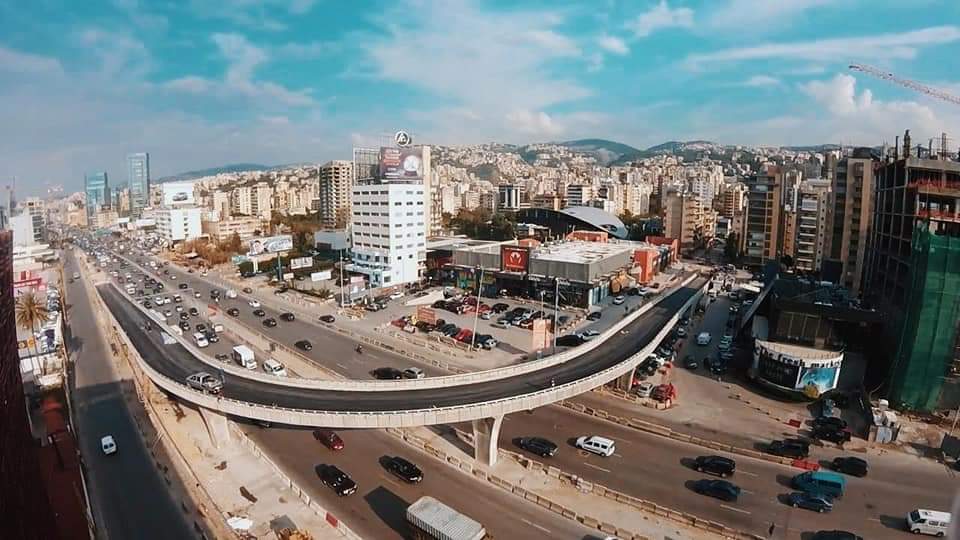
    Following two years of construction work in Jal El Dib, the two 2L bridges were finally open for traffic last Saturday.

    With the project completion, people were promised and actually expected the traffic to get better, except that it actually got worse, and I guess the outcome is simply logical. For cars coming from Jounieh towards Beirut, the road is effectively now narrower in Jal El Dib with an exist ramp follwed by an entrance ramp that eventually turbulate the traffic thanks to the way we drive around here. For example you always see drivers making a sharp right from the left lane to take the exit on the right and consequently slow down the traffic behind them.

    People in charge of road management definitely deserve a trophy. And for those who make the Jounieh-Beirut trip everyday and now have an additional bottleneck on their way, antidepressant pills maybe.

    photo via Lebanese Contractor Magazine

  • Inside The Middle East Airlines Training and Conference Center

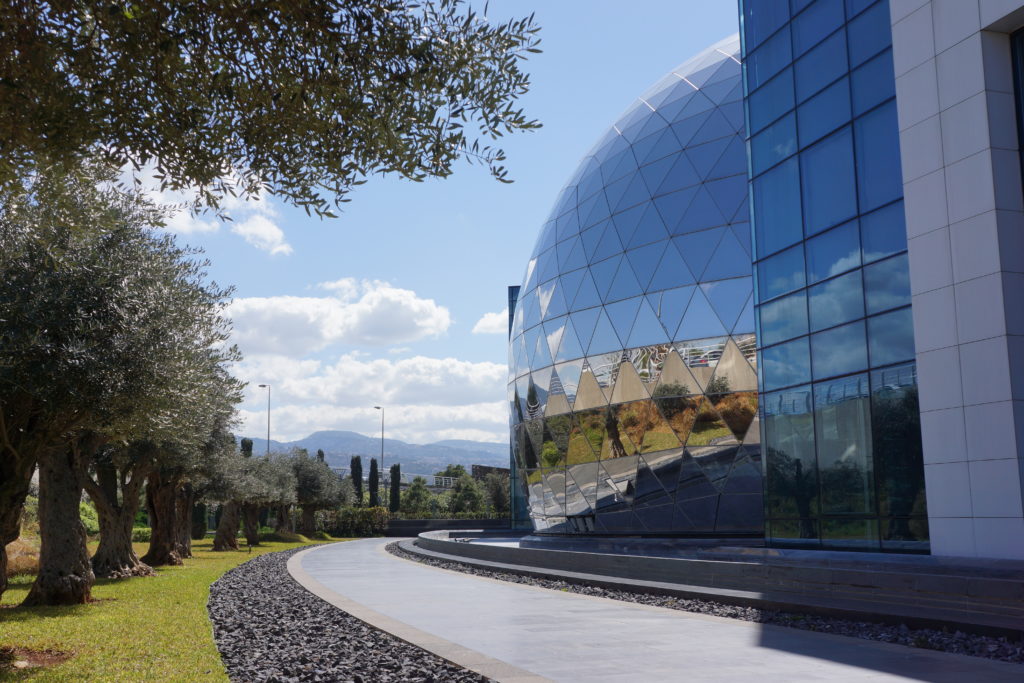
    On the way to airport, and just before you reach its entrance, you can’t but notice “The Dome”. This intriguing structure is part of the Middle East Airlines Training and Conference Center, where their staff get most of their training at. And since I have always felt curious to know how would it be like inside such training facility, I simply contacted someone I know there a couple of weeks ago to check if I can visit the center.

    A few days later, the the cool people at MEA quickly arranged an appointment for me to tour the facility and I was lucky to be accompanied by one of their engineers, a training manager, and of course a communications officer.

    I think people know very little about the things that happen behind the scenes at an airline, so here’s everything I saw at the 43,500 m2 MEA training center.

    Flight Training

    First things first. When I initially asked MEA to visit their training center I was mostly interested in checking the equipment that help their pilots achieve their flight training, so the tour started by first visiting the available simulators.

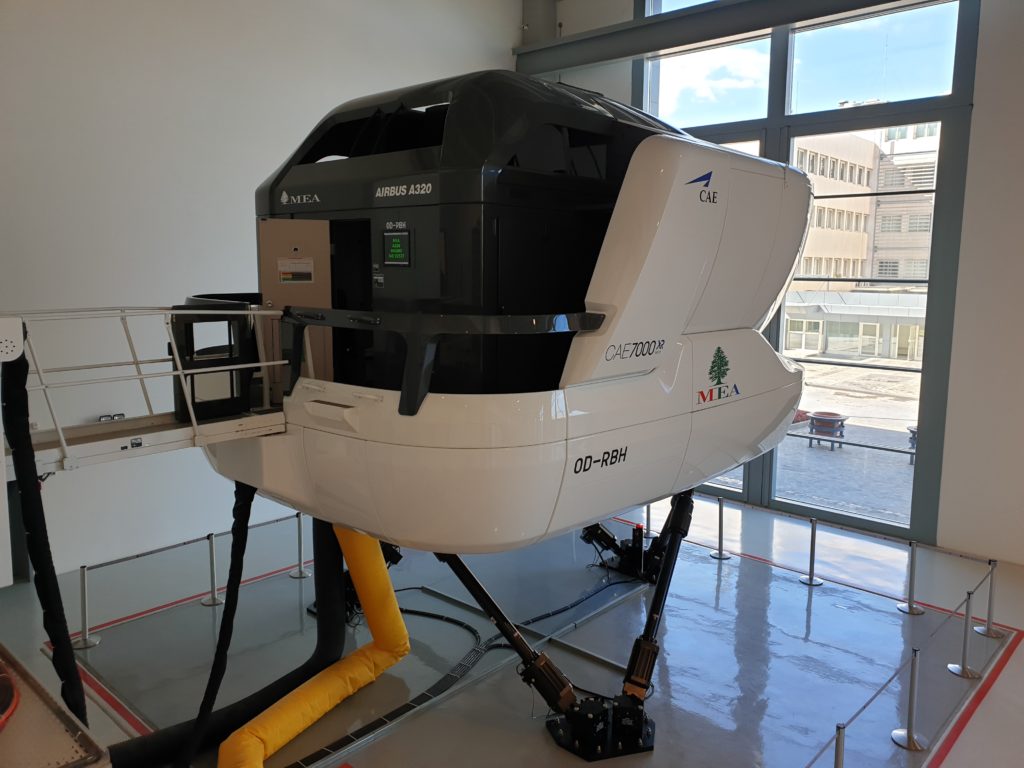
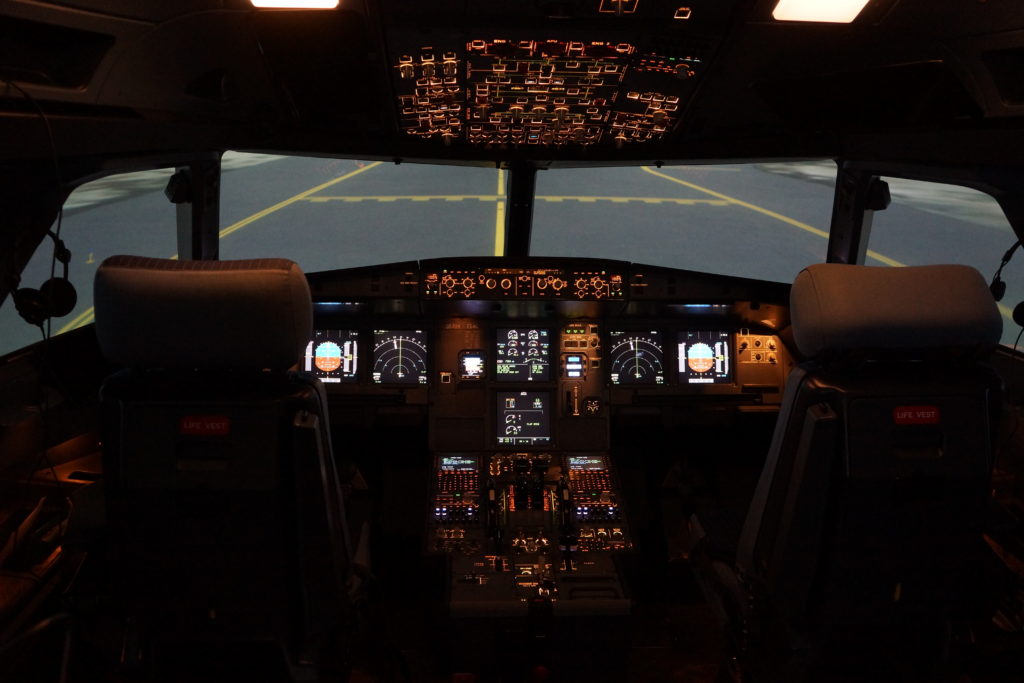
    MEA currently has a full motion Airbus A320 flight simulator, and two other fixed-base simulators. As you can see below, the full motion simulator gives the same feeling as being inside a real cockpit with the surrounding screens displaying very realistic scenes. It can simulate turbulences and any required weather condition, and once you’re inside you simply feel like you’re in a real flight due to all the movement feedback that the device provides. Training on this simulator counts like flying a real airplane for the pilot and it is the only one of its kind in the middle east, that’s why pilots from other airlines in the region come to Lebanon to train on it.

    There’s currently only 1 full motion simulator but the space where it is installed can actually accommodate 3 others. I heard they might soon be getting additional ones but I couldn’t figure out of what model series.

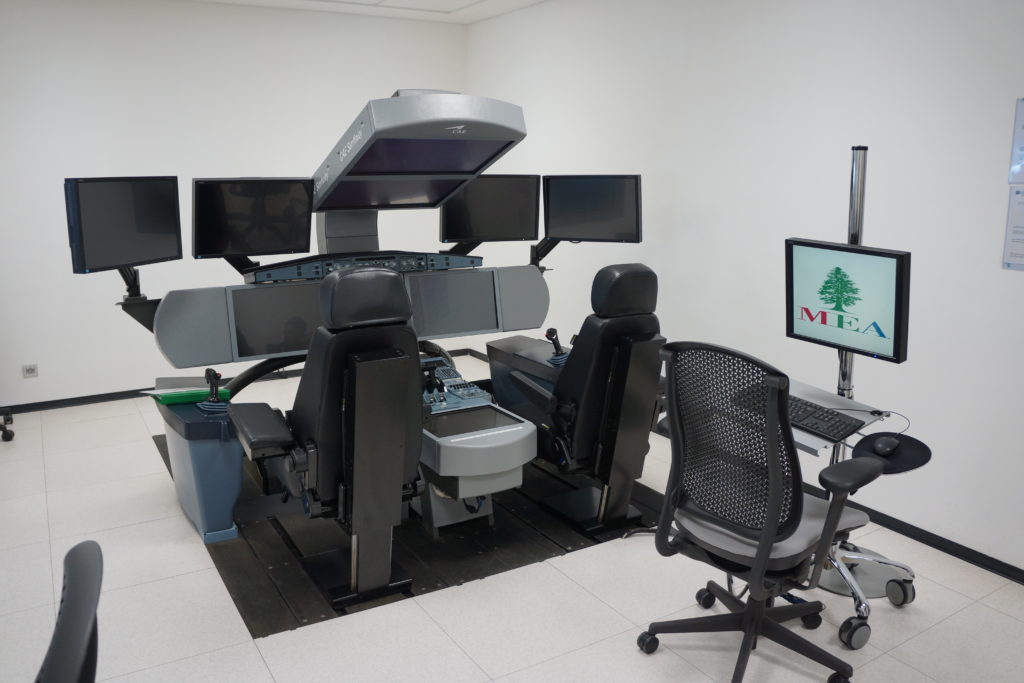
    The other two fixed-base simulator are for the Airbus A320 and A330 but they of course don’t feel as real as the one above.

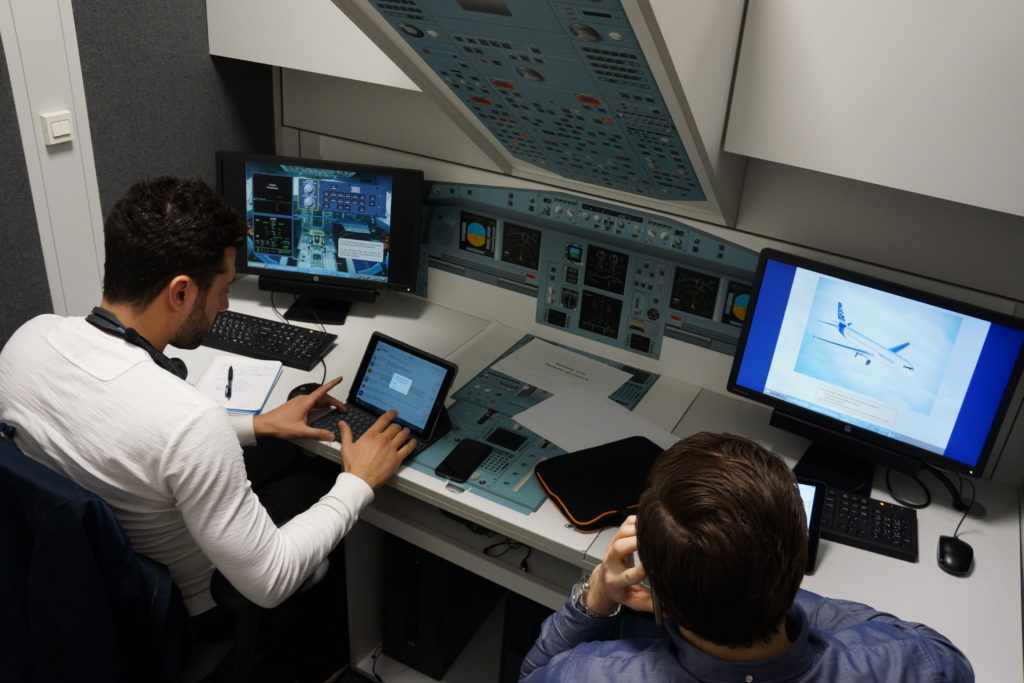
    In addition to the simulators, the center has 20 stations for CBT (Computer Based Training) as well as a facility for pilot’s license renewal. As I was informed, pilots should undergo certain tests every 6 months to renew they licence and the MEA has a dedicated accredited facility for that.

    Cabin Crew Training

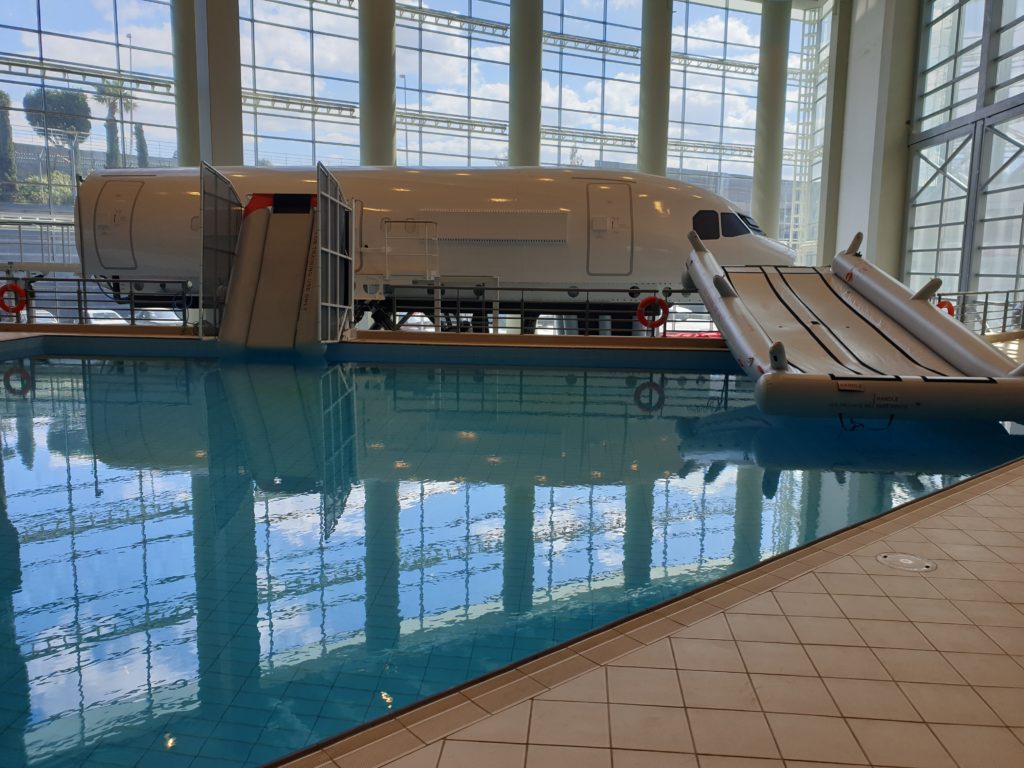
    My second stop was at the division where the cabin crew are trained. Again, real airplane models are used with simulators to train the crew on several evacuation scenarios including jumping into an adjacent swimming pool.

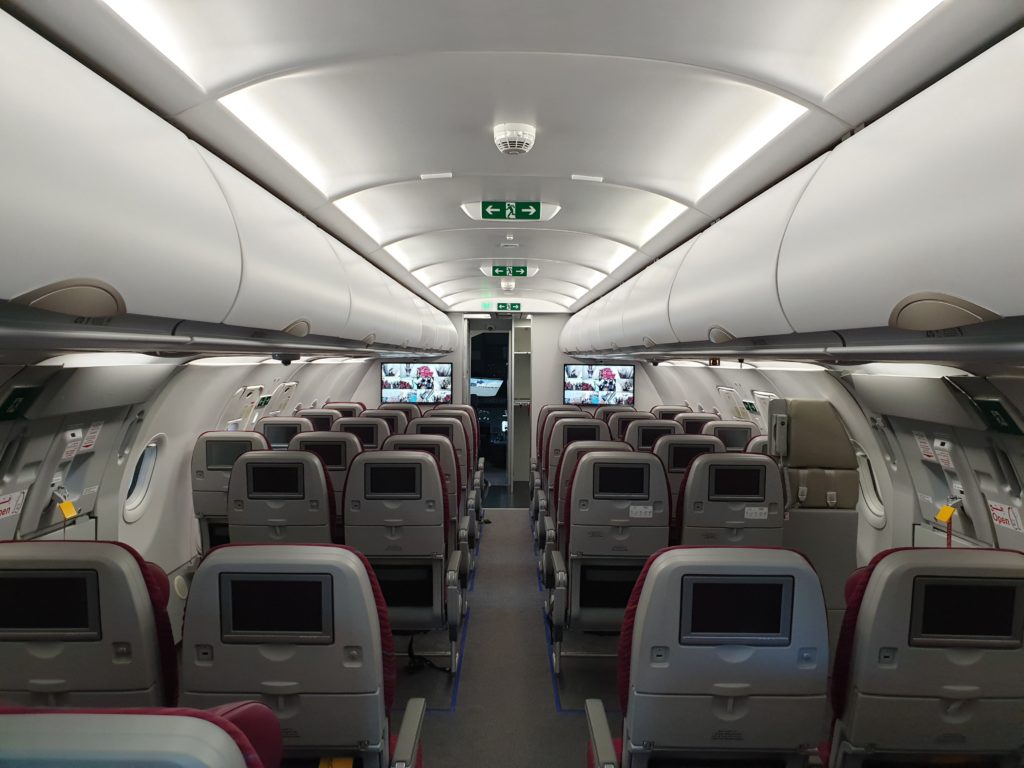
    The material inside the airplane mockup (photo below) are the same that are used in a regular Airbus, while the windows are in fact screens that can simulate different scenarios like a  fire, cracked window, emergency landing, etc… and according to each situation the crew is trained on a course of action. Note that the pilots get similar training  in order to be able to cope with incidents inside the cockpit.

    The Conference Center

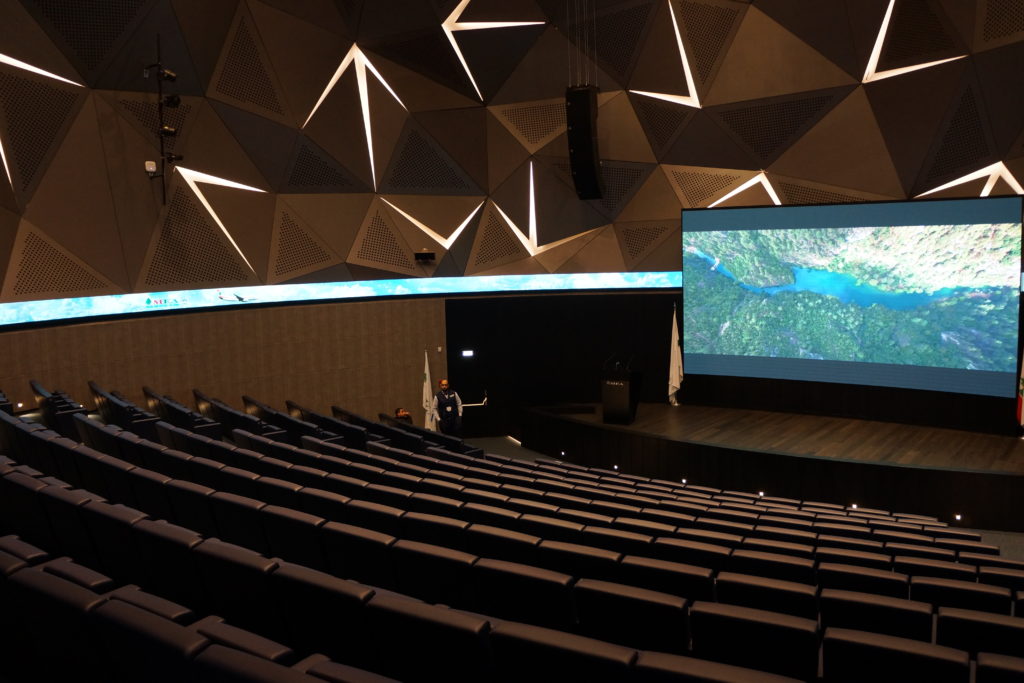
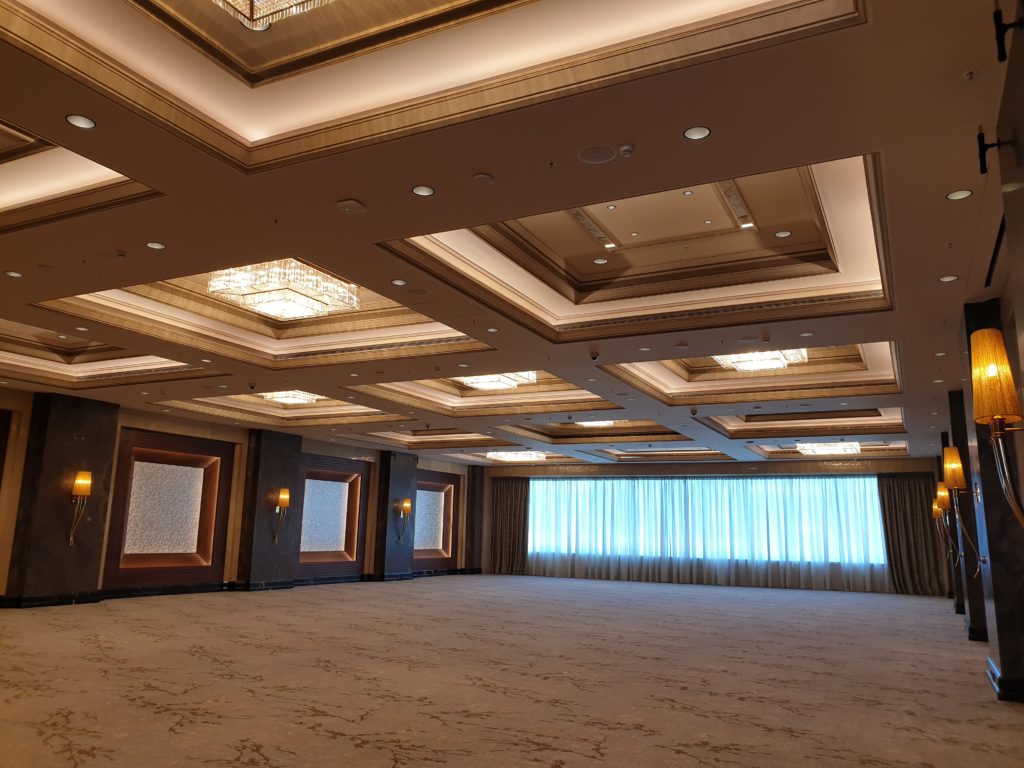
    Apart from the available training facilities, the building has many conference areas. People are probably familiar with the Riad Salaeh auditorium (also known as The Dome) since it shows in the news every now and then, but there’s also a much larger hall, The Mohammad Al Hout hall, which extends over an area of 680 m2 and has a very large attached kitchen to it in order to serve the events.

    The conference zones of the center can host various events and are therefore not for the exclusive use of MEA as they can be rented to any company willing to host an occasion or event.

    The same also applies to the training areas since other airlines in the region pay the MEA sometimes to use the center in order to train their staff. Some of the airlines that recently used the facilities are Cyprus Airways, Air India, and Turkish Airlines. So basically the whole center contributes in generating additional income to the MEA.

    All in all, I really enjoyed the tour and it felt cool getting exposed to the aviation world with all the info that experts were telling me. More importantly, it was also nice to know that a center of such caliber does exist in Lebanon and serves regional airlines from neighboring countries.